
Why Nairobi is one of the great birding cities
Kenya has recorded well over 1,100 bird species, and something close to 600 of them have turned up within about 50km of Nairobi. The reason is geography: the city sits where highland forest, acacia savanna, riverine woodland and Rift Valley wetland all meet within an hour's drive, at altitudes from 1,600m to over 2,400m. You can see a Hartlaub's turaco in a suburb before breakfast and a lesser flamingo flock by mid-afternoon.
Seasonality matters. November to April brings Palaearctic migrants — waders, warblers, raptors, storks — pushing site lists sharply up, with the peak around December and January. Breeding for resident species follows the rains, so March to May and November are busy with nest-building and song. Dawn to about 9.30am is the productive window everywhere; birds go quiet through the hot middle of the day and pick up again after four. Bring 8x42 binoculars and a regional field guide.
1. Nairobi National Park — 500-plus species, 7km from the CBD
First, and no other capital city on earth offers this. The park's 117 square kilometres of open plains, acacia thicket, riverine forest and dams have a recorded list well above 500 species, including ostrich, secretary bird, martial eagle, kori bustard, saddle-billed stork, grey crowned crane and dozens of raptors, with the Athi Basin dams pulling in waders through the northern winter. Big game shares the frame, which no birding site elsewhere in the region matches.
Non-resident entry is roughly KSh5,600 for adults, with citizen rates a small fraction of that, and gates open at 6am — be at the Langata Road main gate at opening for the best light and activity. You need a vehicle; a self-drive day in a saloon car is feasible in the dry season, otherwise hire a driver. Budget four to six hours and take the Ivory Burning Site and Athi Dam loops. The catch is cost and the weekend traffic on the loop roads.
2. Karura Forest — highland forest species inside the city
Second, and the best value on this list. Karura's thousand-plus hectares between Limuru Road and Kiambu Road hold well over 200 recorded species, and it is the reliable Nairobi site for Hartlaub's turaco, African crowned eagle, narina trogon, silvery-cheeked hornbill, African paradise flycatcher and a good spread of greenbuls and sunbirds. The river valley and the waterfall area are the productive sections; the plantation blocks are quieter.
Entry is roughly KSh100 to KSh200 for citizens and residents and around KSh600 for non-residents, gates open about 6am, and you can walk it — no vehicle needed, which is the crucial difference from the national park. Two to three hours from a Limuru Road gate covers the best habitat. Weekend mornings bring runners and cyclists in numbers, so come on a weekday if you want quiet. From Gigiri or Muthaiga it is a five-minute drive.
3. The Wednesday bird walk from the National Museum
Third, and the best introduction anywhere in the country. Nature Kenya, the East Africa Natural History Society, has run free-to-join bird walks from the National Museum on Museum Hill for decades, departing early on Wednesday mornings and rotating between city sites — the museum grounds and Nairobi River valley, the Arboretum, City Park, Ngong Road Forest and further afield. You turn up, you walk with people who know every call, and you leave with a list.
Costs are minimal — annual membership is modest, in the low thousands of shillings, and non-members are generally welcome to join a walk. It is the single best way for a visiting birder to get local knowledge, borrow a scope view and hear about what has been seen where that week. Check the current departure time and meeting point before going, since these shift. Pair it with the National Museum's own bird gallery afterwards.
4. Lake Naivasha — the fish eagle and waterbird lake
Fourth, and the classic overnight. Naivasha is a freshwater Rift Valley lake about 90km northwest, roughly 90 minutes to two hours via the Naivasha highway, ringed by acacia woodland and papyrus. African fish eagles are everywhere, along with pelicans, herons, jacanas, malachite and pied kingfishers, and large numbers of migrant waders from November. A boat trip of one to two hours costs roughly KSh4,000 to KSh8,000 for a small group and puts you among the drowned acacias where the eagles hunt.
Crescent Island, a private sanctuary on the lake, allows walking among zebra, giraffe and waterbuck with excellent open-country birding; entry for non-residents runs around KSh3,500. Go for two nights rather than one — the dawn boat is the good one, and a day trip means arriving at the worst hour for birds. Water levels have risen sharply in recent years, so check that your chosen jetty and shoreline are still operating.
5. Lake Nakuru National Park — pelicans, and flamingos when they come
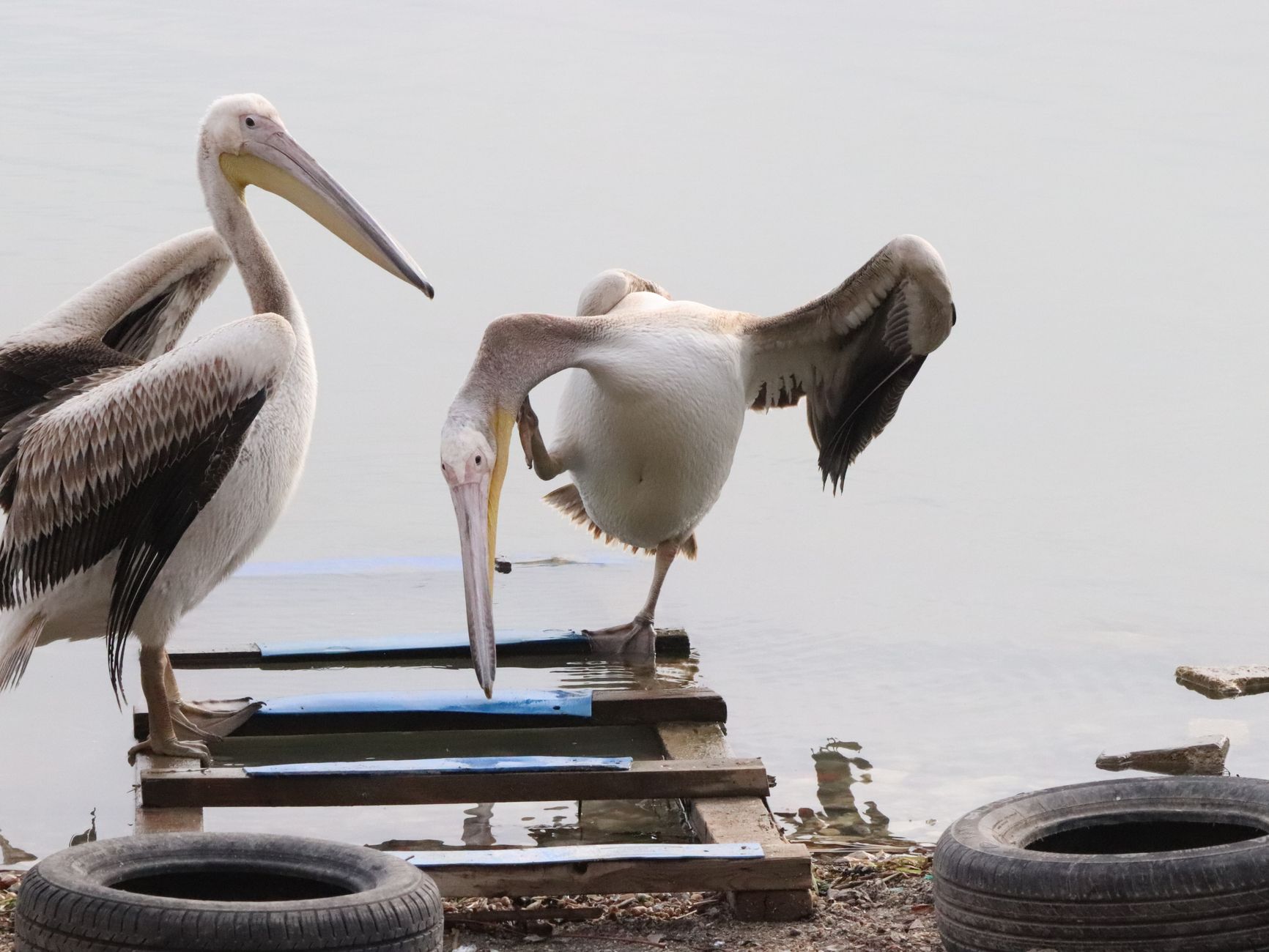
Fifth, with a caveat. Nakuru, about 160km northwest and a two-and-a-half to three-hour drive, was globally famous for lesser flamingo flocks a million strong. Rising water has diluted the alkaline soda that feeds their algae, and the big flocks now move between Rift lakes unpredictably — some years Nakuru holds tens of thousands, some years far fewer. Great white pelicans, however, remain in huge numbers, along with African spoonbill, marabou, grey crowned crane and a strong raptor list.
Non-resident park fees are the significant cost, running into several thousand shillings per adult per day, plus vehicle. The Baboon Cliff viewpoint gives the classic panorama over the lake. Treat this as an overnight rather than a day trip — six hours of driving for four hours of birding is a poor trade. Check current flamingo reports before committing; if the birds have moved to Bogoria or Elmenteita, plan accordingly.
6. Manguo Swamp and the Limuru wetlands
Sixth, and the sharpest value-for-effort on the list. Manguo Swamp sits beside the old Limuru road about 40 to 50 minutes north of Westlands, at around 2,200m, and it is a free roadside wetland that regularly produces maccoa duck, southern pochard, hottentot teal, red-knobbed coot, black crake, herons and a strong wader passage from November to March. You bird it from the verge and the surrounding tracks; no gate, no fee, no vehicle needed once you arrive.
It is small, so an hour and a half covers it, and it pairs perfectly with a tea-farm lunch in Tigoni or a visit to the Limuru Road galleries. Water levels fluctuate hard with the rains — after a dry spell it can be more mud than lake. Go early, wear boots, and be discreet with optics near the road. This is where Nairobi's resident birders go on a free morning, which tells you enough.
7. The Kinangop grasslands — for the endemic
Seventh, and strictly for the committed. The Kinangop plateau, roughly two hours north via Naivasha at 2,400 to 2,600m, holds the last significant population of Sharpe's longclaw, a Kenyan endemic restricted to short tussock grassland, alongside Jackson's widowbird, Aberdare cisticola and long-tailed widowbird in breeding plumage. The habitat is fragmented farmland now, so you need a local guide who knows which fields still hold the birds; arrange one through a Kenyan birding society or a specialist operator.
Costs are guide and transport only — no park fee — but expect KSh8,000 to KSh20,000 for a guided day with a vehicle from Nairobi. It is cold and often wet at that altitude, so bring a fleece and waterproofs even in January. Ranking overall: for one morning, Karura; for one full day, Nairobi National Park at 6am; for one overnight, Naivasha; for a lifer list, Kinangop with a guide.
Questions, answered
What is the best month for birding around Nairobi?
December to February. Palaearctic migrants are at peak numbers on the Rift lakes and in the national park, resident species are in breeding plumage after the November rains, and the weather is dry and clear. October and March are strong shoulder months. Late March to May brings the long rains and difficult track conditions.
Do I need a car to go birding near Nairobi?
Not for Karura, the Arboretum, City Park, the Wednesday museum walk or Manguo Swamp — a ride-hail to the gate is enough. Nairobi National Park requires a vehicle inside the park with no walking permitted, and Naivasha, Nakuru and Kinangop all need a car or a driver-guide for the day.
How much does a guided birding day from Nairobi cost?
A half day in Karura or the city forests with a local guide runs roughly KSh4,000 to KSh8,000 excluding entry. A full guided day to Nairobi National Park costs KSh12,000 to KSh25,000 with vehicle, before the roughly KSh5,600 non-resident park fee. Naivasha or Kinangop day trips with transport run KSh15,000 to KSh30,000.
Which single site gives the biggest list in one morning?
Nairobi National Park. A 6am start covering the Athi Basin dams, the riverine forest along the Mbagathi and the open plains can produce 90 to 130 species before lunch in the migrant season, with raptors, waders, bustards and storks all in play, plus rhino and lion in the same field of view.
Doing good is the business: every booking through Stay Nairobi funds one verified tonne of carbon removal — same room, same price, no markup.
Start your search