
Day trips & escapes
The 6 best coffee and tea experiences near Nairobi, ranked
Six ways to get from a Nairobi cup back to the bush that grew it, ranked, from the Tuesday auction on Wabera Street to a Limuru tea farm lunch, with prices from free to KSh6,000.
The ranking, 1 to 6
1. A Limuru tea farm morning at Tigoni, the best-value half day out of Nairobi and the only one that ends with lunch on a lawn at 2,200m. 2. A Kiambu coffee estate tour, where you walk the rows, see the pulping and drying, and cup at the end. 3. The Nairobi Coffee Exchange auction on Wabera Street in the CBD, a Tuesday-morning trading floor that most visitors have never heard of. 4. A specialist roastery cupping in Nairobi, the cheapest way to taste six Kenyan origins side by side.
5. Paradise Lost at Kiambu, a coffee farm wrapped around caves and a boating lake, which is more family outing than agricultural education. 6. The Karen coffee-garden restaurants, where you drink good coffee among old estate buildings without learning much about farming. Nothing here is more than 90 minutes from Westlands and most is under an hour. If you can only do one, do the Limuru tea farm: it is the most complete experience, the drive up through the forest is beautiful, and the temperature drop of five or six degrees from the city is a pleasure in itself.
1. Limuru and Tigoni tea farms
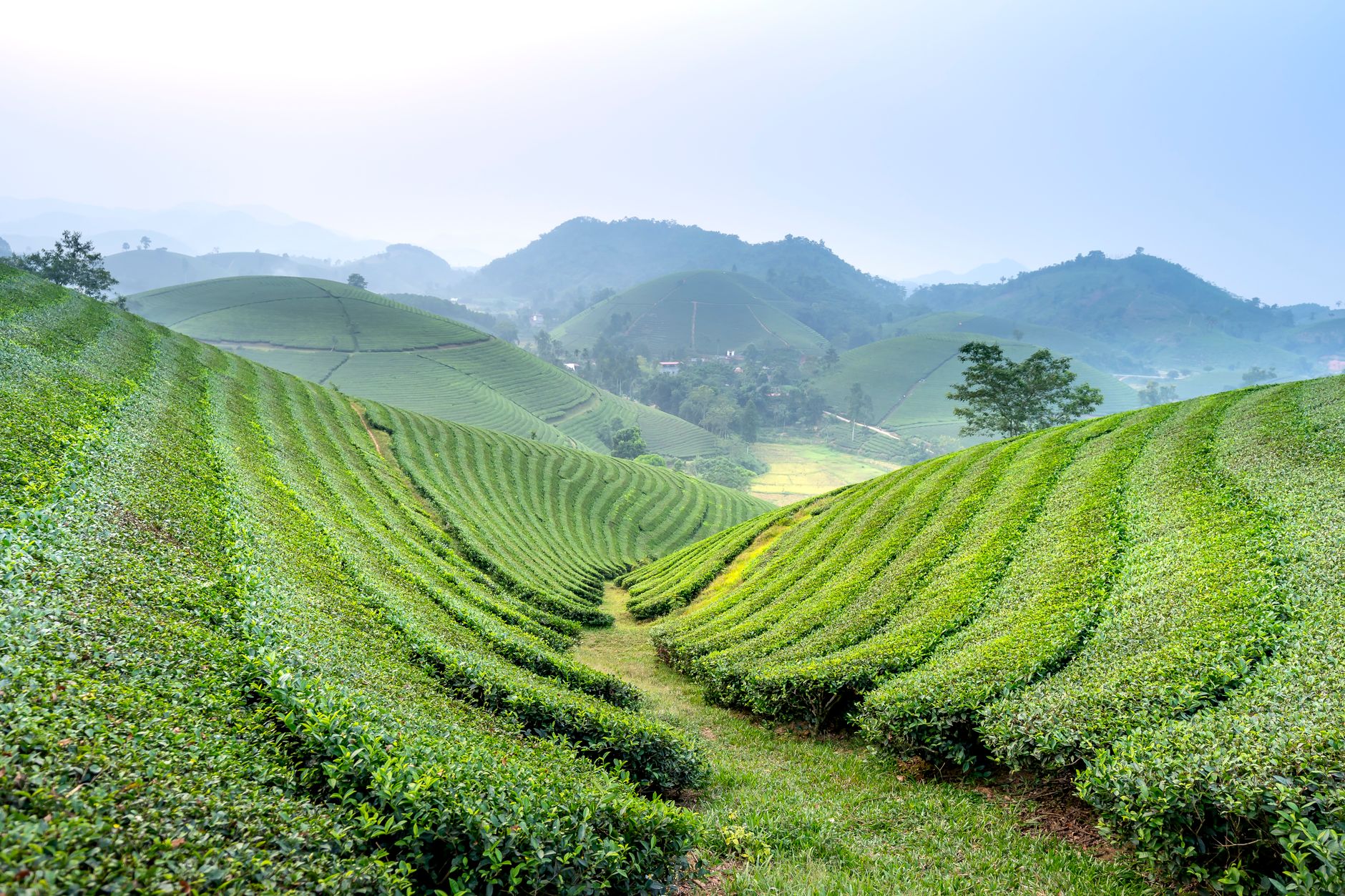
Limuru sits about 35km northwest of the city up the Limuru Road, an hour outside rush hour, and the country there is clipped green tea to the horizon at around 2,200m. The established farm visits combine a walk through the bushes with an explanation of plucking, the two leaves and a bud, and processing, followed by a tasting and a three-course lunch served on the lawn or by a fire if the mist has come in. Expect to pay in the region of KSh4,000-6,000 per person including the meal, booked in advance.
The forest walk that some farms include, through remaining indigenous woodland with colobus monkeys overhead, is the part people remember. Dress for cool: Limuru runs 15-20 degrees by day and genuinely cold in the July and August mornings, and it rains more than Nairobi. Go on a weekday and book at least a few days ahead, since these are small operations with fixed lunch numbers. Buy tea at the farm gate, loose leaf at KSh500-1,000 for a good bag, which is worlds better than the dust in supermarket teabags.
2. Kiambu coffee estates
The red soil belt immediately north of Nairobi, through Kiambu and toward Ruiru, is classic Kenyan arabica country, and several working estates run tours. A proper one walks you through the plantation, explains the SL28 and SL34 varietals and the newer Ruiru 11 and Batian, shows the wet mill where cherry is pulped and fermented, the drying beds, and ends with a cupping. Reckon on KSh2,500-5,000 per person for two to three hours, sometimes with lunch, usually needing a booking rather than a walk-in.
Timing changes what you see. The main harvest runs roughly October to December with a lighter fly crop around June, so a visit in November puts pickers, pulpers and full drying beds in front of you, while a March visit shows you empty machinery and flowering trees. Both are interesting; only one is dramatic. Drive time from Westlands is 40-60 minutes via Kiambu Road, longer if you leave after 4pm. Buy beans on site, KSh1,200-2,000 for 500g of estate-roasted AA, and ask for a roast date.
3. The Nairobi Coffee Exchange, Wabera Street
This is the sleeper on the list. The Nairobi Coffee Exchange in the CBD runs the weekly auction where Kenya's coffee is bought, traditionally on Tuesday mornings during the season, with dealers bidding on lots identified by mill and grade. It is a working commodity floor, not an attraction: no ticket desk, no gift shop. With advance permission arranged through a licensed marketing agent or a specialist tour, you can observe from the gallery and watch the price of Kenyan AA get set in real time.
It ranks third because it is genuinely fascinating and genuinely awkward to arrange. Auctions do not run every week of the year, they pause outside the main marketing season, and casual visitors are not automatically welcome. If you have any professional interest in coffee, spend the effort on the phone calls: nothing else in East Africa shows you the commercial end of the chain so directly. If you do not, take the roastery cupping instead and skip the paperwork entirely.
4. Roastery cuppings in the city
Several Nairobi roasteries, mostly in Karen, Lavington and the industrial belt, run public cuppings where you taste four to eight single-origin Kenyan lots side by side: Nyeri, Kirinyaga, Kiambu, Embu, occasionally Kisii. The format is standard specialty protocol, slurping from spoons, comparing acidity and body across the row. Sessions typically cost KSh1,000-2,500 or are free if you buy beans, and run 60-90 minutes, often on Saturday mornings. It is the fastest way to understand why Kenyan coffee tastes of blackcurrant and tomato leaf.
This is also where you buy properly. Nairobi has an odd history of exporting its best and drinking its worst, but the current roasteries sell freshly roasted AA and AB at KSh1,200-2,200 for 500g, ground to order. Ask what farm or washing station the lot came from; a roaster who cannot tell you is selling you a blend. For a traveller with a single free morning in the city and no car, this beats a farm trip on convenience and loses on scenery, which is exactly why it sits at four.
5 and 6. Paradise Lost and the Karen coffee gardens
Paradise Lost, on the Kiambu side about 45 minutes from Westlands, is a coffee farm that has built an outing around a set of caves, a waterfall, a boating lake, camel and horse rides and picnic lawns. Entry runs roughly KSh500-1,000 with activities charged on top. There is coffee growing there and you can see it, but nobody is going to walk you through fermentation tanks. Treat it as a family day out with an agricultural backdrop and it delivers well; treat it as a coffee education and you will be disappointed.
In Karen, the coffee-garden restaurants set in the old estate buildings near the Karen Blixen Museum give you good coffee, colonial-era architecture, jacaranda shade and a lunch menu, 20 minutes from most Karen guesthouses. Coffee runs KSh350-600 a cup, mains KSh1,500-3,000. It is a lovely two hours and it is not a farm tour. Rank it last on this list, use it as the ending to a Karen day that already includes the museum and the giraffe centre, and do not drive an hour from Westlands specifically for it.
Seasons, driving and what to bring home
Coffee harvest peaks October to December, with picking and processing at full tilt and the drying beds covered. Tea is plucked year round on a seven to fourteen day cycle, so a Limuru farm looks the same in February as in September, though the January to February dry spell gives the clearest views across the ridges and the April to May long rains turn the access tracks slippery. Nairobi's own dry cool season, July and August, is pleasant for both but Limuru can be genuinely grey and cold then, around 13 degrees at breakfast.
Driving yourself is fine on the tarmac routes to Limuru and Kiambu, but the last kilometre to several farms is dirt and best in something with clearance. A private car and driver for a half day runs roughly KSh8,000-14,000 and removes the parking and navigation problem. For gifts: loose Kenyan black tea or purple tea from a Limuru farm, KSh500-1,000; a 500g bag of roast-dated AA from a Nairobi roastery, KSh1,200-2,200. Skip the airport tins entirely, which are stale and cost double.
Questions, answered
How far is a tea farm from central Nairobi?
Limuru and Tigoni sit roughly 30-40km northwest via Limuru Road, which is 50-70 minutes outside peak hours and up to two hours if you leave Westlands at 5pm. The altitude gain to about 2,200m means it is five or six degrees cooler than the city, so bring a jacket even in January.
When is the coffee harvest in the Nairobi region?
The main crop is picked roughly October to December, with a smaller fly crop around May to July. Visit an estate in November and you will see picking, pulping, fermentation and drying beds all working at once. Outside those months you get the plantation and the machinery but no activity.
Can I visit the Nairobi coffee auction as a tourist?
Only with advance arrangement. The Nairobi Coffee Exchange on Wabera Street is a working trading floor, historically holding Tuesday auctions during the marketing season, not a visitor attraction. Access is usually through a licensed marketing agent or a specialist coffee tour, and auctions pause outside the season, so confirm before planning around it.
What should I buy to take home?
Whole-bean Kenyan AA with a roast date from a Nairobi roastery, KSh1,200-2,200 for 500g, and loose-leaf tea straight from a Limuru farm at KSh500-1,000 a bag. Both survive a flight fine. Ask for beans whole rather than ground and keep them in your hand luggage.
Doing good is the business: every booking through Stay Nairobi funds one verified tonne of carbon removal — same room, same price, no markup.
Start your search