
The ranking, 1 to 8
1. The Maasai Market rota, because it is the only place in the city where beadwork, kiondo baskets and soapstone are all on one tarpaulin. 2. City Market on Muindi Mbingu Street, for carved wood and cut flowers under a 1930s concrete roof. 3. Kariokor Market off Racecourse Road, because Kenyan leather sandals are made and sold in the same shed. 4. Toi Market on Ngong Road, the friendliest introduction to secondhand clothing. 5. Gikomba, the wholesale monster that supplies Toi and everywhere else. 6. Wakulima, better known as Marikiti, for produce at 5am.
7. Muthurwa, worth twenty minutes of your life purely as a spectacle of commerce and matatu chaos. 8. Diamond Plaza in Parklands, which is a market pretending to be a shopping centre and the best place in Nairobi for Indian spices, kitchenware and evening snacks. If you have only one free morning, do the Maasai Market on whichever day it falls near your hotel and then walk into City Market for an hour. That pairing gets you 90 percent of the souvenirs on offer, at prices you can actually argue about, with no traffic between them.
1. The Maasai Market, wherever it lands this week
This is not one market but a travelling one, setting up in mall car parks on a fixed weekly rota: Fridays at Village Market in Gigiri, Sundays on the rooftop deck at Yaya Centre in Kilimani, Thursdays at The Junction on Ngong Road, plus midweek stops around the CBD. The rota does shift, so ask your hotel front desk the day before rather than trusting a blog. Trading runs roughly 8am to 6pm and the last two hours are when prices soften, because nobody wants to pack a full stall back into a matatu.
Bring small notes. Opening quotes for a beaded belt or a sisal kiondo run three to four times the settling price, and a KSh3,000 ask is often a KSh900 sale. Look for the stalls selling their own work rather than resold stock: the beadwork sellers will show you the wire and beads in a tin at their feet. Best buys are kiondo baskets with leather trim (KSh1,500-3,500), Turkana wrist knives, and Kisii soapstone bowls. Skip the mass-produced painted animals in identical rows, and skip anything sold as antique ivory or bone, which you cannot legally export anyway.
2. City Market, Muindi Mbingu Street
The Municipal Market building, a 1930s art-deco hall in the middle of the CBD, is the most atmospheric shopping in Nairobi and the easiest to reach on foot from any city-centre hotel. The ground floor is curios: soapstone, Kamba wood carvings, Maasai blankets, drums, and a small forest of makonde-style sculpture. The perimeter is butchers and fishmongers, and the flower sellers along the Koinange Street side sell roses grown around Naivasha for KSh200-400 a bunch, a fraction of what those same stems fetch once they have been on a plane.
The hard sell inside is real. Traders will follow you between stalls and quote in dollars if they clock you as a first-time visitor; answer in shillings and keep walking, and the number drops fast. Go before 11am when the light through the roof is good and the aisles are half empty. A carved olive-wood bowl should land around KSh1,200-2,500 depending on size, a Maasai blanket around KSh1,500. Ignore the wooden giraffes at the door, which are the most marked-up thing in the building, and head to the back where the older carvers work.
3. Kariokor, for sandals and baskets made on site
Kariokor sits off Racecourse Road, walkable from the eastern edge of the CBD but easier by ride-hail for about KSh300-500. Its reputation rests on leather: akala sandals cut from recycled tyre tread and hide, made by hand in the workshop stalls, and sold for KSh800-1,800 depending on stitching and sole. Sizing is approximate, so try both feet on and expect a firm break-in period. The same lanes hold the city's best sisal weaving, with kiondos sold cheaper than any mall market because you are buying from the person who wove them.
This is a working market, not a tourist stop, and that is its charm and its catch. There is no signage, the lanes are narrow, and photography without asking will get you told off. Go with a light day bag, KSh5,000 in small notes and no laptop. Weekday mid-mornings are calmest. Order custom sandals on your first day in Nairobi and collect them a few days later, which is common practice and usually costs KSh200-400 extra. If you only want one Kenyan-made thing to take home, make it a pair of akala from here.
4 and 5. Toi and Gikomba, the mitumba circuit
Toi Market, along Ngong Road at the Kibera edge, is the gentle entry point to Kenya's secondhand clothing trade. Bales of imported clothes are opened here every week, and Nairobians of every income bracket dig through them. Shirts run KSh100-500, jeans KSh300-800, a good wool coat KSh800-1,500, and the vintage denim and 1990s sportswear that resellers hunt for is genuinely here. Saturdays are the big day. Come with cash in a front pocket, leave the watch at the hotel, and haggle in a good humour because the margins here are thin and everyone knows it.
Gikomba, near Pumwani east of the CBD, is the wholesale source and the largest secondhand market in East Africa. It is thrilling and it is a lot: mud underfoot after rain, handcarts moving at speed, and a history of serious fires. Go with a Kenyan friend or a local guide, go before noon, and carry nothing you would mind losing. Prices are 30-50 percent below Toi if you buy in quantity. My honest advice for a short visit: do Toi, skip Gikomba unless you have a local companion and a real reason to be there.
6 and 7. Marikiti and Muthurwa, the food and transport engines
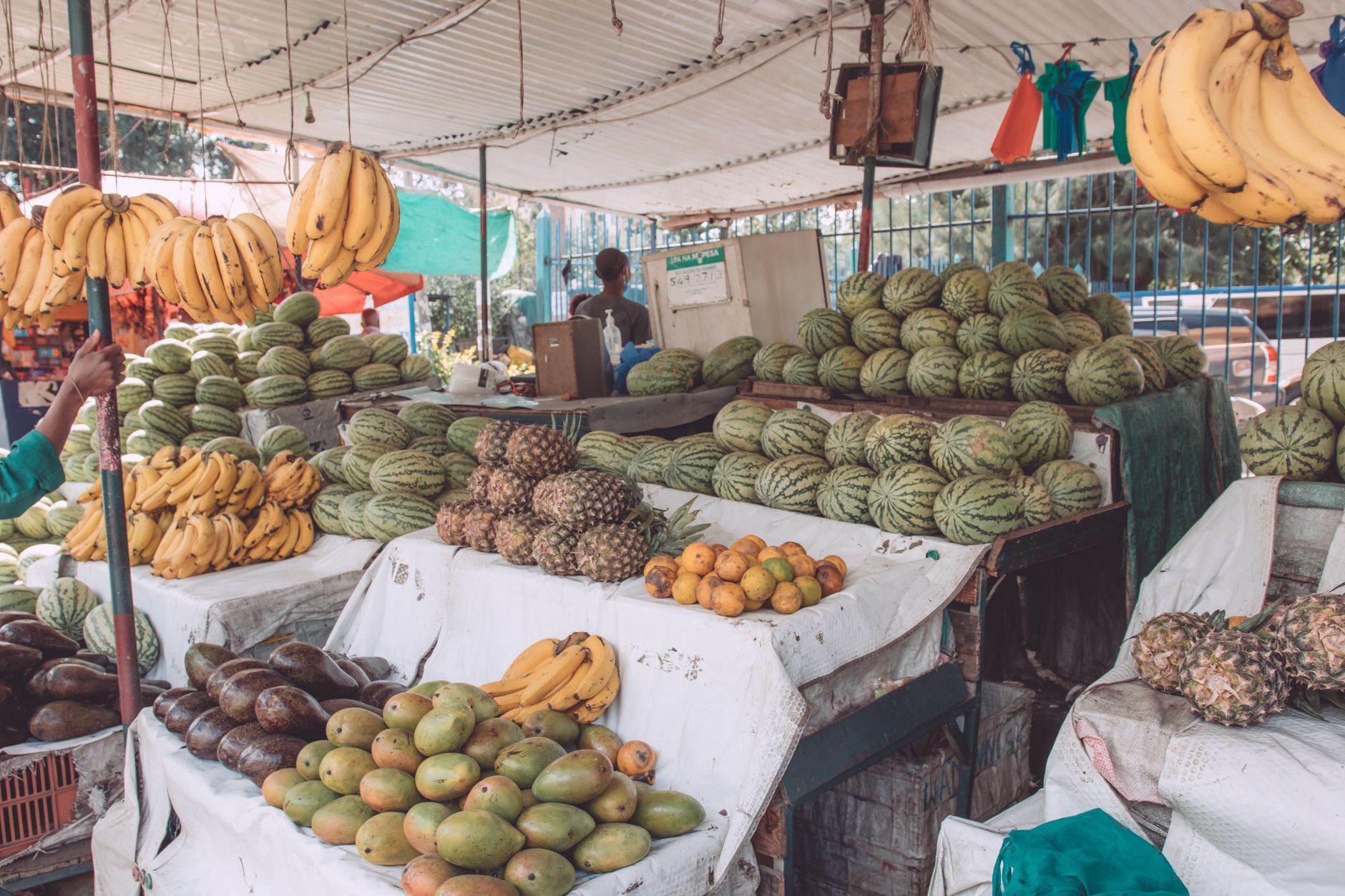
Wakulima Market, universally called Marikiti, is where lorries from Meru, Kinangop and Nyandarua unload at night. Get there between 5am and 7am and you will see the produce economy of central Kenya arriving in sacks: sukuma wiki, potatoes, tomatoes, avocados sold by the crate for less than a mall pays for four. It is not a shopping destination for a visitor without a kitchen, but for anyone interested in how the city feeds itself, an hour here at dawn beats any museum display on Kenyan agriculture, and a ride-hail from Westlands takes about 20 minutes at that hour.
Muthurwa, next door, is a hybrid of market and matatu terminus, and it is the single most concentrated dose of Nairobi street commerce you can get. Hawkers, hardware, secondhand shoes, roast maize, sacks of charcoal, and hundreds of matatus loading for Eastlands. Twenty minutes on foot is enough. Do not bring a big camera, keep your phone away, and do not attempt it at night. Both markets rank low here for shopping value and high for understanding the city, which is why they sit at six and seven rather than being left off.
8. Diamond Plaza and the weekend farmers' markets
Diamond Plaza in Parklands is a two-building complex where the ground floors are stacked with spice merchants, sari fabric, kitchenware and Indian sweets, and the courtyard becomes an open-air food court in the evening. Buy whole spices here rather than at any supermarket: cardamom, cloves and masala blends at a third of mall prices, and Kenyan tea from Kericho and Limuru sold loose by the kilo for KSh500-900. It closes down quietly on Sundays for some traders, so aim for a Friday or Saturday evening when the samosa and bhajia stalls are all firing.
Separately, weekend farmers' markets rotate around Karen and Lavington, usually Saturday mornings from about 9am to 2pm, selling honey, granola, cheese from Limuru dairies, and produce from the smallholdings just outside the city. They are expensive by Nairobi standards, with a jar of honey at KSh900-1,400, and they are firmly a middle-class Nairobi scene rather than a traditional market. Worth it for edible souvenirs that survive a flight, and for a coffee sitting on grass. Check the current schedule locally, because organisers and venues change from season to season.
How to shop these markets without being fleeced
Carry cash in small denominations. Many curio traders now take M-Pesa, but the moment you produce a card or a bank app you have announced a budget. A working rule at the Maasai Market and City Market: counter the opening quote at 25-30 percent, settle around 35-45 percent, and be prepared to walk away twice. At Kariokor, Toi and Gikomba, prices are much closer to fixed because margins are small, so aim for a 10-20 percent trim and no more. Never let a self-appointed guide attach himself to you at the door, because his commission goes onto your price.
Timing matters more than negotiating skill. Weekday mornings are calm everywhere; Saturdays are busiest at Toi and Gikomba; Sunday is dead in the CBD, which makes City Market a poor Sunday plan. Traffic on Ngong Road and Racecourse Road is brutal from 4pm, so finish by three and ride-hail back rather than fighting a matatu with an armful of baskets. If you want one plan: Maasai Market on the day it falls, City Market before lunch, Kariokor after lunch, and everything else only if the city has already won you over.
Questions, answered
How much should I actually pay for a kiondo basket?
A medium sisal kiondo with leather handles runs KSh1,500-3,500 at the Maasai Market once you have negotiated, and a little less at Kariokor where they are woven. Opening quotes of KSh6,000 are routine. Large ones with tight, even weave and dyed patterns justify the top of that band.
Is Gikomba Market safe for visitors?
Go before noon, go with a Kenyan companion or a hired guide, and carry only cash you can afford to lose. Pickpocketing in the crush is the main risk, and the market has suffered repeated fires. Toi Market on Ngong Road offers the same secondhand shopping with far less pressure.
Do Nairobi market traders take M-Pesa or cards?
Most curio and clothing traders take M-Pesa, which needs a Kenyan SIM registered in your name. Almost none take cards. Bring KSh5,000-10,000 in notes of KSh100, KSh200 and KSh500 for a serious shopping morning, and keep the bulk of it separate from your spending pocket.
Can I take carvings and beadwork out of Kenya?
Wood carvings, soapstone, beadwork, sisal baskets and leather are all fine. Anything made from ivory, tortoiseshell, or wildlife products is illegal to buy or export and will be seized at Jomo Kenyatta International Airport. If a trader whispers that something is genuine bone or old ivory, walk away.
Doing good is the business: every booking through Stay Nairobi funds one verified tonne of carbon removal — same room, same price, no markup.
Start your search