
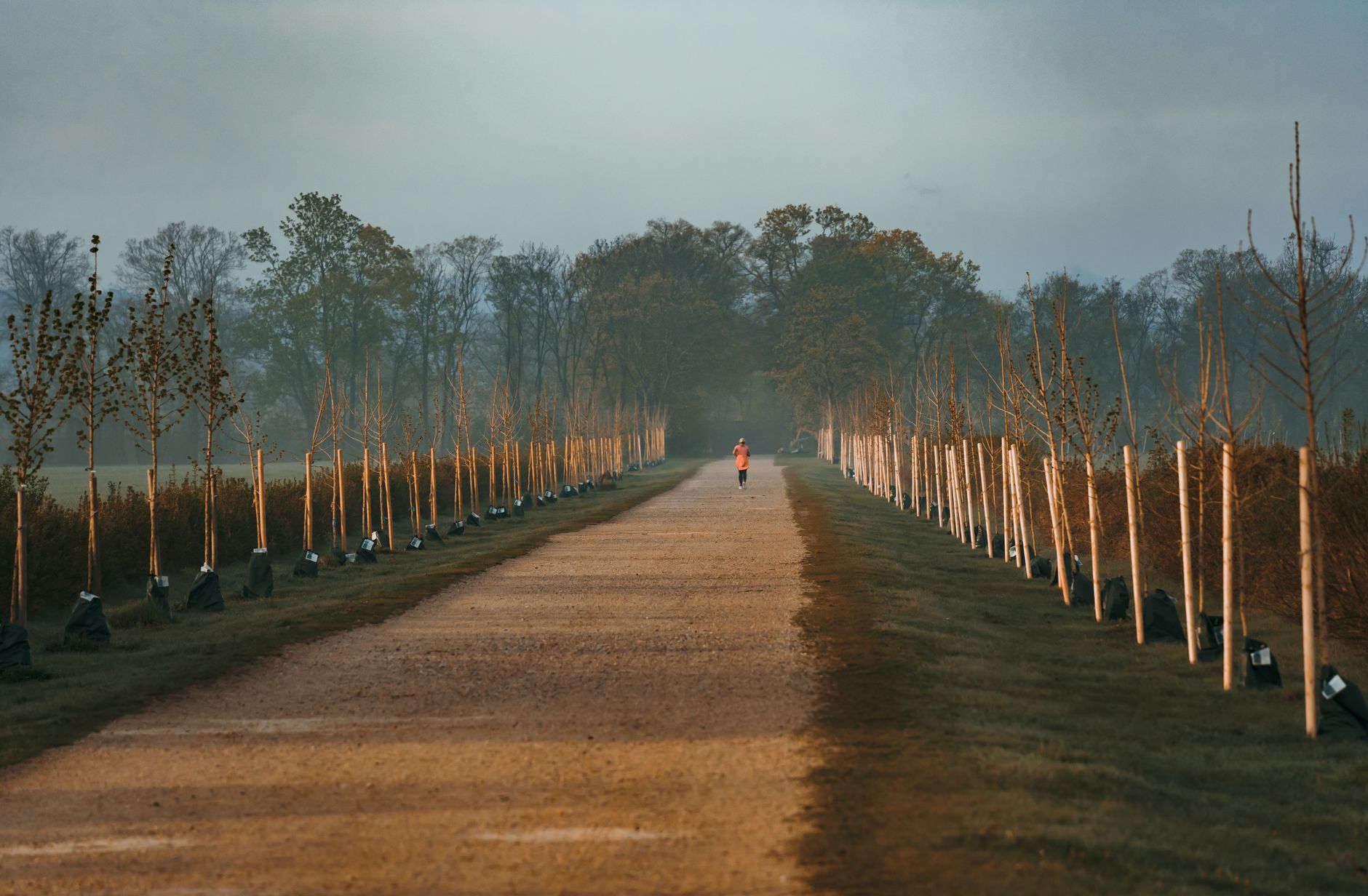
What running at 1,795m in Nairobi actually involves
Nairobi sits at about 1,795m, which is enough altitude to add 20 to 40 seconds a kilometre to your usual pace for the first four or five days. Mornings are the window: 6.30am to 8.30am brings 13 to 17C, clean air before the traffic builds, and dry ground for most of the year. By 11am it is 24 to 28C with strong equatorial sun, and by 5pm the arterial roads are gridlocked and the exhaust is unpleasant.
Do not run on the roads. Nairobi has almost no continuous pavement, matatus use the shoulder, and there is no cycling or running culture on the tarmac outside a few residential loops in Runda and Muthaiga. Everything worth doing is inside a forest or a fenced facility. Rainy seasons — roughly late March to May and again in November — turn the red-earth trails to slick clay, so bring shoes with real lugs if you are visiting then.
1. Karura Forest — 50km of trails inside the city
First, decisively. Karura is over 1,000 hectares of indigenous and plantation forest between Limuru Road and Kiambu Road, fenced, patrolled and threaded with about 50km of marked murram trails, plus a waterfall, caves, a bamboo section and the Amani Garden. Entry runs roughly KSh100 to KSh200 for citizens and residents and around KSh600 for non-residents, with gates on Limuru Road, Kiambu Road and Old Kiambu Road opening about 6am.
It is the safest, most varied running in the city and the only place you can string together 20km without repeating yourself. Saturdays bring a free timed 5km parkrun-style event and a lot of company; weekday mornings you will see a dozen people all trip. Gigiri, Runda and Muthaiga hotels are five minutes from a gate; Westlands is 15 to 25. The one catch is that the fee adds up over a week for non-residents — ask about annual or monthly passes if you are staying long.
2. Nairobi Arboretum — the convenient 1.5km loop
Second on usefulness rather than beauty. The Arboretum, off State House Road behind the university, is a compact 30 hectares of mature trees with a main loop of roughly 1.5km on packed earth and a network of shortcuts. Entry is a nominal few hundred shillings. It opens at 6am and by 6.30 is full of running clubs, boot camps doing burpees on the grass, and office workers getting 5km in before work.
The value is location: it is a five to ten minute drive from Kilimani, Lavington and CBD hotels, so it is the one place you can run before a 9am meeting without factoring in traffic. The drawback is that it is small — a 10km run means seven laps, and Saturday mornings are so busy you spend the session dodging. Use it midweek, early, for a tempo session, and go to Karura for anything long.
3. Ngong Road Forest Sanctuary
Third, and underrated. The Ngong Road Forest sits between Ngong Road and Kibera Drive, with about 15km of sandy single-track and fire roads through eucalyptus and indigenous stands. Entry is modest, in the low hundreds of shillings, and there is a fenced, patrolled sanctuary section that is the part to use. It draws mountain bikers, trail runners and the Nairobi trail-race community, so the paths are well worn and easy to follow.
It is the closest proper trail running to Kilimani, Lavington and Karen — 10 to 20 minutes by car — and the surface is kinder underfoot than Karura's murram. The trade-off is that it is less patrolled at the fringes and quieter, so go with someone or go at the popular hours between 6.30am and 9am on weekends. The undulating profile makes it the best hill-repeat option in the city without leaving the tarmac ring.
4. Oloolua Nature Trail, Karen
Fourth, and the prettiest short run. Oloolua, on the Karen side near the primate research institute, is a roughly 5km forest trail with a river, a small waterfall, a bamboo grove and a cave, on soft earth under closed canopy. Entry is a few hundred shillings for residents and around KSh600 for non-residents. It is quiet enough that you will hear colobus and hornbills over your own footfall.
The route is out-and-back rather than a loop, so a proper session means running it twice, and after rain the river section gets genuinely muddy. It suits anyone staying in Karen or Langata — five to fifteen minutes by car — and it is a lovely easy-day run rather than a workout venue. Pair it with breakfast at one of the Karen garden cafes afterwards and you have the most pleasant morning on this list.
5. Ngong Hills — the ridge traverse
Fifth by convenience, first by drama. The Ngong Hills run a chain of seven grassy summits along a ridge southwest of the city, topping out around 2,460m, with the Rift Valley falling away on one side and Nairobi on the other. The full traverse from the Ngong town gate to Kona Baridi is 13 to 14km one way with roughly 700m of cumulative climbing. Entry is in the low hundreds of shillings for residents and around KSh600 for visitors.
This is a planned outing, not a morning jog: 45 to 75 minutes by car from central Nairobi via Ngong Road, an early start to beat the heat and the afternoon cloud, and a ranger escort is strongly advised — budget KSh1,000 to KSh2,000 and arrange it at the gate. Arrange a car at the far end or run out and back. Wind on the ridge is constant, so carry a layer. It is the best long run within an hour of the city, comfortably.
6. The tracks: Nyayo Stadium and Kasarani
Sixth, for anyone with a session on the plan. Nyayo National Stadium, just off Mombasa Road at the edge of the CBD, and the Moi International Sports Centre at Kasarani, about 15km northeast, both open their tracks to the public outside training and event hours for a small gate fee, usually in the low hundreds of shillings. Kasarani has the better surface and the more serious company — you may find yourself lapped by athletes who race for a living.
The etiquette is standard: outside lanes for warm-ups, inside lanes for intervals, and step off if a group is coming through. Check by phone before travelling, because both venues close to the public for competitions and national-team camps with little notice. For a visitor doing a structured build, an early Kasarani session is one of the more memorable things you can do in Nairobi with a stopwatch.
7. What to skip, and which races to time a trip around
Skip road running on Ngong Road, Waiyaki Way, Thika Road and Mombasa Road entirely — no shoulder, no pavement, and matatus that treat lane markings as decoration. Skip Nairobi National Park, where you are not permitted out of a vehicle for obvious reasons. Skip Uhuru Park and Central Park for anything longer than a jog; they are pleasant enough but small and busy. And do not run alone after dark anywhere in the city, forest gates close around 6pm regardless.
For racing: the Standard Chartered Nairobi Marathon takes over the city roads in late October and is the one day of the year the tarmac is genuinely yours, with full, half and 10km fields. The Ndakaini Half Marathon in September runs around a reservoir in the Aberdare foothills about two hours north and is the country's best-loved scenic road race. Local trail-running groups also put on regular Saturday events in the Ngong Hills and Kereita forest near Kijabe, with entries typically KSh1,500 to KSh4,000.
Questions, answered
Is it safe to run alone in Nairobi?
Inside fenced, patrolled forests during daylight, yes — Karura, the Arboretum and the Oloolua trail are used daily by solo runners. Do not run alone on the Ngong Hills ridge or in unpatrolled forest edges, and do not run on public roads or after dusk. Carry a phone, minimal cash, and nothing visible worth taking.
How much does it cost to run in Nairobi's forests?
Karura is roughly KSh100 to KSh200 for citizens and residents and about KSh600 for non-residents per entry. The Arboretum, Ngong Road Forest and Oloolua sit in similar bands, with visitor rates up to KSh600. Ngong Hills is comparable plus KSh1,000 to KSh2,000 for a ranger escort. Stadium tracks charge a small gate fee.
How long does it take to adjust to the altitude?
Most runners feel normal after four to seven days at 1,795m. Expect the first two or three runs to feel 20 to 40 seconds a kilometre slower at the same effort, with a harder breathing rate on climbs. Drink more than you think you need, and save any hard session for day four onwards.
What is the best time of year to run in Nairobi?
January to March and July to early October, when trails are dry and mornings sit around 13 to 17C. The long rains from late March into May and the short rains around November turn murram to slippery clay, and afternoon storms are frequent — run before 9am in those months and use lugged shoes.
Doing good is the business: every booking through Stay Nairobi funds one verified tonne of carbon removal — same room, same price, no markup.
Start your search