
The ranking, 1 to 8
1. Mutura, the Kenyan grilled blood-and-offal sausage, because nothing else tastes this specifically of Nairobi evenings. 2. Somali sambusa in Eastleigh, thinner-pastried and better spiced than anything sold as a samosa elsewhere in town. 3. Smokie pasua, a split sausage crammed with kachumbari, the perfect KSh70 walking snack. 4. Chapati with beans, the workhorse lunch of every kibanda in the city. 5. Mahindi choma, charred street maize with chilli and lime. 6. Viazi karai and bhajia, the fried potato snacks of Parklands and the coast. 7. Mahamri with spiced tea. 8. Mutumbo and matumbo-adjacent stews, for the committed.
Nyama choma sits deliberately outside this list, because grilled goat and beef is a sit-down institution deserving its own ranking, and we have done that separately. Everything here is eaten standing, wrapped in newspaper or handed over on a torn plastic sheet, for under KSh400. The rule that keeps you well is simple: eat where there is a queue of local office workers, eat food that is hot off heat rather than sitting in a tray, and drink bottled or filtered water rather than anything ladled from a jerrycan.
1. Mutura, and where to find a good one
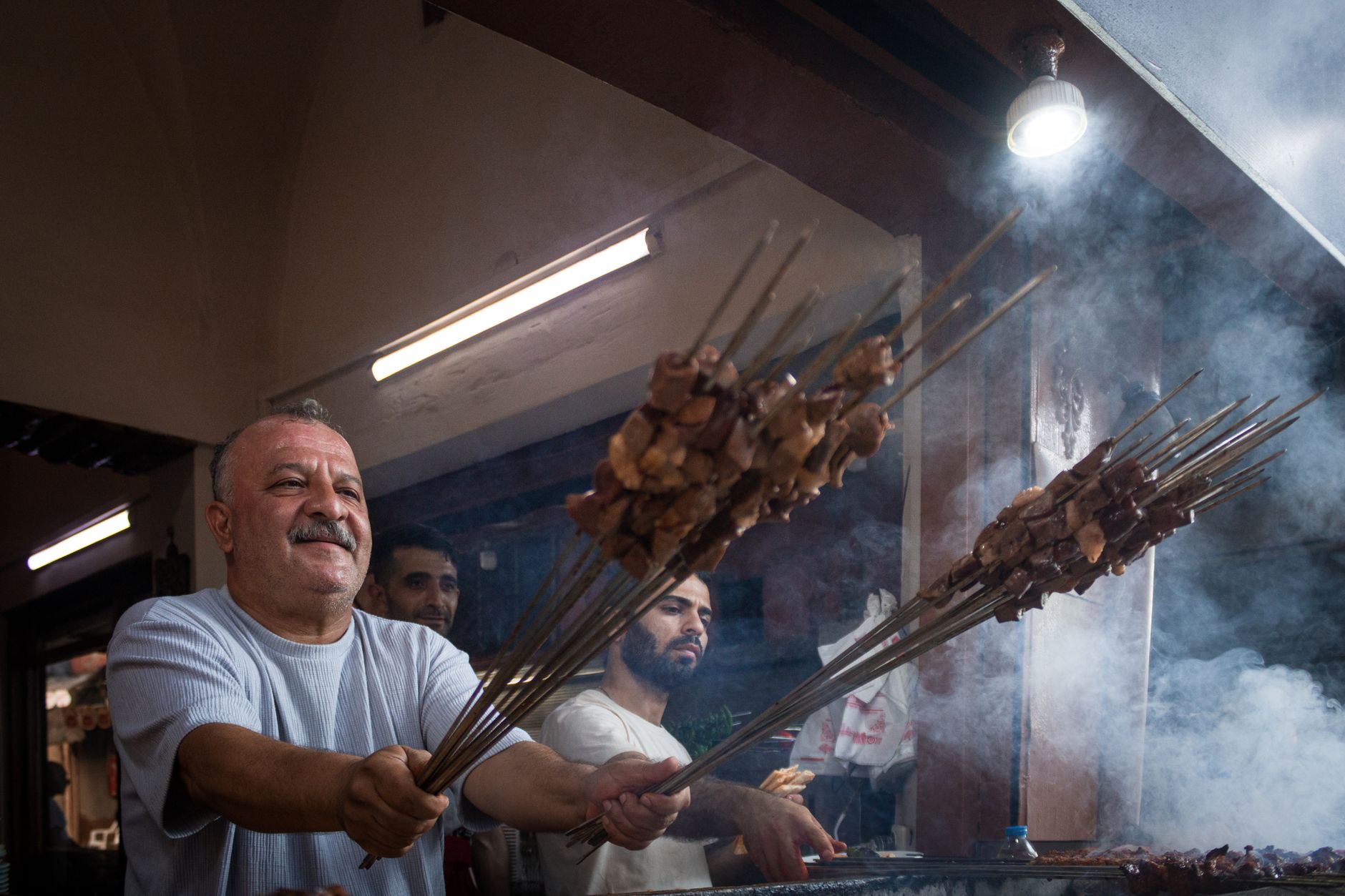
Mutura is stuffed intestine casing filled with minced meat, blood and fat, boiled then charred over coals, sliced into coins with a blunt knife and dusted with salt and chilli. A good one is smoky and slightly crisp at the edges with a soft, rich centre. A bad one is grey, dry and vaguely liverish. Portions are sold by the slice or by weight, generally KSh20-50 a piece or KSh200-300 for a decent plate with kachumbari on the side. It is strictly an evening food; the good vendors light up from around 5pm.
The best hunting grounds are Kenyatta Market off Ngong Road, the lanes around Ngara, and the Eastlands estates where mutura has near-cult status, particularly around Kayole and Umoja. If you are staying in Westlands or Kilimani, ask your ride-hail driver where he eats and you will get a better answer than any listing site. Judge a stall by the coals, not the crowd: you want a bed of glowing charcoal and a vendor turning the coil constantly. Skip anything reheated from a cool box. Wash it down with a soda, which is what everyone else is doing.
2. Sambusa and the Eastleigh table
Eastleigh, northeast of the CBD, is Nairobi's Somali commercial quarter and its best eating neighbourhood for anyone who likes spice and pastry. Sambusa here are triangular, thin-shelled and filled with minced beef or camel with green chilli and coriander, and cost KSh50-100 each from counters along First and Second Avenue and inside the big malls. They come with a fiery green chilli sauce. Order three and a cup of shaah, the cardamom and cinnamon tea, and you have a KSh300 meal that beats most hotel breakfasts in the city.
Go beyond the sambusa while you are there. Malawah, the sweet pancake, is a proper breakfast; suqaar, cubed spiced beef with rice; and camel meat, which is leaner and slightly sweet, sold by weight in the meat halls. Eastleigh is busy, muddy in the rains, and the roads are legendarily broken, so take a ride-hail rather than driving yourself and go in daylight. Fridays after prayers the food streets are at their fullest. This is the neighbourhood I would send any hungry visitor to before the Westlands restaurant strip.
3 and 4. Smokie pasua and chapati madondo
Smokie pasua is what it says: a smoked sausage bought from a vendor's insulated box, split lengthways, packed with kachumbari of tomato, onion and coriander, hit with chilli sauce and ketchup, and handed to you in a scrap of newspaper. It costs KSh50-80. The vendors work bus stages, market gates and pavement corners across the city, often from a bicycle. It is not sophisticated. It is exactly the right thing at 4pm when you have been walking the CBD since ten and lunch is a distant memory.
Chapati with madondo, stewed beans, is the fixed point of every kibanda in Nairobi: the tiny corrugated-iron lunch kitchens near every office block and market. A chapati is KSh20-30, a plate of beans and chapati around KSh100-150, add stewed beef and you are at KSh250-350. Look for chapatis being rolled and cooked in front of you rather than stacked in a plastic bin. The CBD lanes off Kimathi Street and the side streets around Kenyatta Market both do this well. It is the cheapest genuinely good meal in the city.
5 and 6. Mahindi choma, viazi karai and bhajia
Mahindi choma is maize roasted over coals at the roadside, rubbed with a cut lime dipped in salt and chilli, and it costs KSh30-60 a cob. Kenyan street maize is field maize rather than sweetcorn, so it is chewy and starchy and the point is the char and the lime, not sweetness. You will find vendors along Ngong Road, near Uhuru Park, and outside every matatu stage. Ask for it well roasted, not pale; the good ones will hold it back over the coals another minute if you say so.
Viazi karai are potato chunks in a turmeric batter, deep fried and served with tamarind chutney, a coastal Swahili snack that has settled comfortably into Nairobi. Bhajia are the sliced potato version, thicker and heavier, often served with chilli sauce. Both are best at Diamond Plaza in Parklands, where the evening food stalls in the courtyard fry them to order for roughly KSh150-300 a portion, and around the mosque area of the CBD. Avoid trays of them going cold in a glass case, which is the default failure mode of both dishes.
7 and 8. Mahamri, chai and the offal end of the menu
Mahamri are cardamom and coconut-milk doughnuts, triangular, lightly sweet, sold from the same counters as mandazi for KSh20-40 each. Mandazi is the more common Kenyan version and slightly plainer. Either one dunked in strong milky chai, KSh30-60 a cup, is the standard Nairobi breakfast and it is genuinely good when the frying oil is fresh. Buy them before nine in the morning and you get them warm; buy them at three in the afternoon and you get the ones nobody wanted, which is the entire difference between loving and hating this dish.
At the far end of the ranking sits matumbo, stewed tripe, and the various offal plates sold in the same places as mutura. They are cheap, KSh150-250 a plate, deeply loved locally, and a genuine acquired taste for most visitors because the texture is the point. Try a small portion at a busy stall before ordering a full plate. What to skip entirely: pre-fried chips sitting in a warm cabinet, the sausage-in-a-bun sold at petrol stations, and anything from a vendor who is handling money and food with the same hand.
Eating well without getting sick
The practical rules are boring and they work. Eat food that has just come off charcoal or out of hot oil, which covers most of this list. Avoid uncooked salads and kachumbari if your stomach is nervous, though it is the single best thing about a smokie pasua. Drink bottled water and skip ice from street vendors. Carry hand sanitiser, because there is rarely a tap. Start with grilled and fried items in your first days and work toward stews and offal once you have been in the country a week.
Cash is essential in small notes, KSh50s and KSh100s, though many vendors take M-Pesa if you have a local SIM. Prices are generally fixed and honest; if you are quoted KSh500 for a smokie you are being taxed for being new, so smile and offer KSh70. The safest single introduction is a guided food walk through Eastleigh or the CBD kibandas, typically KSh3,000-6,000 per person for two to three hours with tastings included, and worth it if you are nervous about picking stalls yourself.
Questions, answered
Is Nairobi street food safe to eat?
Broadly yes, if you eat things cooked to order over heat and skip anything sitting lukewarm. Mutura off live coals, sambusa straight from the fryer and chapati rolled in front of you are all low risk. Drink bottled water, avoid street ice, and give your stomach the first two days to adjust.
How much should a full street meal cost?
Between KSh150 and KSh400 for a filling one. Chapati and beans lands at KSh100-150, three Eastleigh sambusa with tea at about KSh300, a plate of mutura with kachumbari at KSh200-300. Anything above KSh600 for street food means you are in a mall food court, not on the street.
Where in Nairobi is the best area for street eating?
Eastleigh for Somali food, Kenyatta Market on Ngong Road for mutura and grilled meat, the CBD lanes off Kimathi and Tom Mboya for kibanda lunches, and Diamond Plaza in Parklands for Indian fried snacks in the evening. All four are reachable by ride-hail for under KSh700 from Westlands.
Can vegetarians eat street food in Nairobi?
Yes, but you will be working around a meat-heavy culture. Chapati with madondo or ndengu, viazi karai, bhajia, mahindi choma, mandazi and mahamri are all meat-free. Diamond Plaza in Parklands is the strongest single stop, with several genuinely vegetarian counters serving dosa, chaat and sweets.
Doing good is the business: every booking through Stay Nairobi funds one verified tonne of carbon removal — same room, same price, no markup.
Start your search