
Hotel round-ups
Hotels with big gardens and forest views in Nairobi, ranked
Nairobi sits at 1,700m with indigenous forest inside the city limits, and these 9 garden and forest-edge stays are ranked by how much green you actually get for KSh8,000 to KSh40,000 a night.
What a Nairobi garden buys you that a pool does not
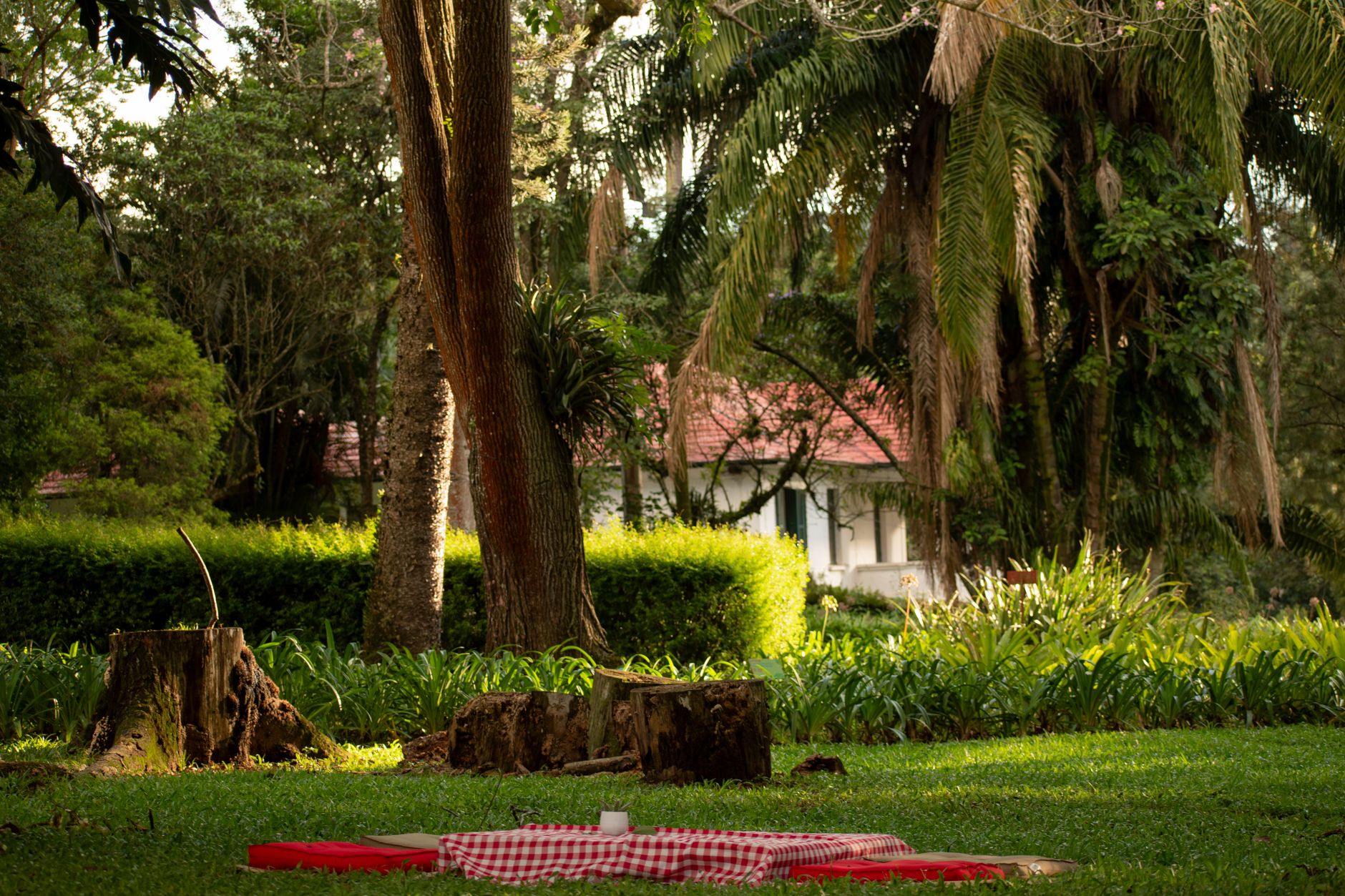
At 1,700m the city has no serious mosquito problem, negligible malaria risk and evenings that drop to 12-14°C in June and July, which means a garden here is usable in a way most tropical hotel lawns are not. You can eat outside at 7pm in a jumper, sit by a fire, and wake at 6.15am to hadada ibis, weavers and Sykes' monkeys working through the fig trees. The suburbs that deliver this — Karen, Langata, Muthaiga, Gigiri, Runda, parts of Lavington — were laid out on one- to five-acre plots a century ago, and the trees are now enormous.
The distinction worth making is garden versus forest edge. A garden means lawn, jacarandas that flower purple through late September and October, Nandi flame in red, clipped hedges and a gardener at 7am. A forest edge means your boundary is Karura, Oloolua or the Ngong road belt, and you get bushbuck, duikers, occasional bushbabies calling at night and a genuinely wild soundtrack. Forest edge is better and costs about the same; there is simply less of it, and it books out first at weekends and over the December holidays.
Karen and Langata: the deepest green, the longest commute
Karen has Nairobi's best gardens by a distance. Cottage stays and small lodges off Karen Road, Bogani Road and Ngong Road sit on two to five acres with old cedar and croton, and at KSh8,000-20,000 a night for a cottage with a fireplace you get more usable outdoor space than a KSh40,000 city suite. Langata, next door and slightly cheaper at KSh6,000-14,000, adds proximity to Nairobi National Park's main gate, the Giraffe Centre and the Sheldrick Trust, all inside 15 minutes. Breakfast on a Karen lawn in October under falling jacaranda is as good as Nairobi gets.
The commute is the price, and it is steep. You are 18-20km from the CBD via Ngong Road or Langata Road, and even with the Southern Bypass you should budget an hour each way in the peaks. That makes Karen wrong for anyone with daily meetings in Westlands or Upper Hill, and right for anyone whose trip is wildlife, the Karen Blixen Museum, Oloolua's forest trail and long lunches. Pick a property whose plot backs onto forest or the park boundary rather than another estate, and ask which way the rooms face for morning light.
Muthaiga and the Karura edge: the best combination in the city
Muthaiga, with its old-growth gardens off Muthaiga Road and Limuru Road, sits directly against Karura Forest, which is the single best amenity attached to any Nairobi accommodation. Guesthouses and small hotels here run KSh15,000-30,000 and give you 50km of forest trails, a waterfall, bamboo groves and Mau Mau caves reached on foot from your door for a small entry fee. Runners and walkers should book nowhere else. You are also 10-15 minutes from Westlands and 20 from the CBD off-peak, which is the compromise Karen cannot offer.
This is my overall pick for a garden stay in Nairobi. Rooms are usually in converted houses with fewer than fifteen keys, breakfast is on a terrace, and the trees are the sort that take eighty years. Two caveats: Limuru Road traffic between 7am and 9.30am is severe, so plan meetings for after ten; and some Muthaiga plots have been subdivided, so confirm the plot size and whether the room you are booking looks at garden or at the neighbour's wall. Ask for photographs from the room window rather than of the room.
Gigiri and Runda: manicured, secure, slightly corporate
The diplomatic belt does gardens in a tidier register: clipped lawns, watered year-round from boreholes, flowering shrubs, and enough security that you can leave a laptop on the terrace. Rates of KSh12,000-25,000 buy a room in a small hotel or guesthouse with mature grounds, a pool more often than not, and Village Market or Two Rivers five minutes away for supplies. It suits families and anyone working with the UN complex, and it is the easiest area in Nairobi to be comfortable in without thinking about anything.
What it lacks is wildness. These are gardens, not forest — the tree cover is planted and even, the birdlife is good but suburban, and the boundary is a wall rather than a treeline. Runda is quieter than Gigiri and the plots are larger; Rosslyn sits between them. If you want green and calm without the Karen commute, this is the answer. If you want to be woken at 5.50am by a tree hyrax or to see a bushbuck cross the lawn, spend the same money in Muthaiga or on the Karen forest edge instead.
Lavington and Kileleshwa: garden suburbs that are actually central
Lavington's older plots off Gitanga Road and James Gichuru Road, and the leafier corners of Kileleshwa, hold onto substantial gardens while being 10-15 minutes from Westlands and 20 from the CBD. Small hotels and converted houses charge KSh10,000-18,000, and the trees along Muthangari and Convent drives are among the best canopy in the city. This is the practical choice for a working visit that still wants a lawn to eat breakfast on: you keep the green and you lose two hours a day of traffic compared with Karen.
The honest warning is development. Both suburbs are being rebuilt from bungalows into six-storey apartment blocks, so a garden guesthouse may have a construction site next door with concrete pours starting at 7am and continuing on Saturdays. Ask the property directly whether any neighbouring plot is under construction, and ask for a room on the far side if it is. Kileleshwa in particular has changed fast; Lavington's older streets have held their trees better, so favour the addresses west of Gitanga Road.
The city-centre exceptions and the Arboretum belt
Central Nairobi has a handful of genuine garden survivors: the historic landmark hotels near the university and around Harry Thuku Road built with courtyard gardens and old trees, where you can have breakfast under bougainvillea and walk to the National Museum in ten minutes. Rates at that level run KSh18,000-35,000 and you are paying for the address and the history as much as the greenery. It is a real option if your days are downtown and you cannot face a commute, and the garden, while small, is properly old.
Better value sits on the Arboretum belt in Kilimani and along State House Road, where mid-range hotels and apart-hotels at KSh10,000-16,000 are a short walk from the Nairobi Arboretum's 30 hectares of trees and its weekend crowds of picnickers and joggers. You do not get a private lawn, but you get a public one full of indigenous species with a small entry fee, and you are 15 minutes from both the CBD and Westlands. For a solo traveller who wants morning green and evening restaurants, this is the sharpest compromise in the city.
Seasons, what to skip, and the booking I would make
Time it if you can. Late September through October is jacaranda season, when whole streets in Muthaiga, Lavington and Karen go purple and the gardens are at their best after the short rains begin. June and July are cold, grey and beautiful in a different way, with fires lit by 6.30pm and mist over the Ngong Hills. January and February are dry, dusty and brilliantly clear, when Mount Kilimanjaro occasionally shows from high ground on the Kajiado road. The long rains in April turn every murram driveway to mud, which is the only season I would avoid for a garden stay.
My ranking: Muthaiga first for forest access plus a workable commute, Karen second for sheer acreage, Lavington third for the central compromise, Runda and Gigiri fourth for polish and security, the Arboretum belt fifth on value, CBD courtyards last. Skip any listing that shows a garden photograph without a room photograph from inside; skip Kileleshwa addresses next to active construction; and skip the assumption that a five-star tower with landscaped terraces counts — planted beds around a pool deck are not the same thing as eighty-year-old trees, and they cost twice as much.
Questions, answered
Which Nairobi suburb has the best hotel gardens?
Karen for size, Muthaiga for quality plus access to Karura Forest on foot. Karen plots run two to five acres with old cedar and croton; Muthaiga gardens are smaller but back onto 50km of forest trails and sit 10-15 minutes from Westlands, which makes Muthaiga the better all-round booking for most visitors.
Do I need mosquito nets in a Nairobi garden hotel?
Rarely. At 1,700m Nairobi is above the main malaria transmission zone and mosquitoes are a minor nuisance rather than a health issue, so most garden guesthouses do not fit nets. Take precautions when you travel down to Naivasha, the coast or lower-altitude parks, where the calculation changes completely.
When are Nairobi's gardens at their best?
Late September into October, when the jacarandas flower purple across Muthaiga, Lavington and Karen and the short rains have greened everything. June and July are cold and misty with fires lit in the evening, which suits cottage stays. Avoid mid-April, when the long rains turn murram driveways to mud.
Can I walk in the forest straight from the hotel?
In Muthaiga and along Limuru Road, yes — Karura Forest gates are within walking distance of several guesthouses and the trails run 50km with a waterfall and caves. From Karen, Oloolua Nature Trail is a short drive rather than a walk. Both charge a modest entry fee and both are safe in daylight hours.
Doing good is the business: every booking through Stay Nairobi funds one verified tonne of carbon removal — same room, same price, no markup.
Start your search