
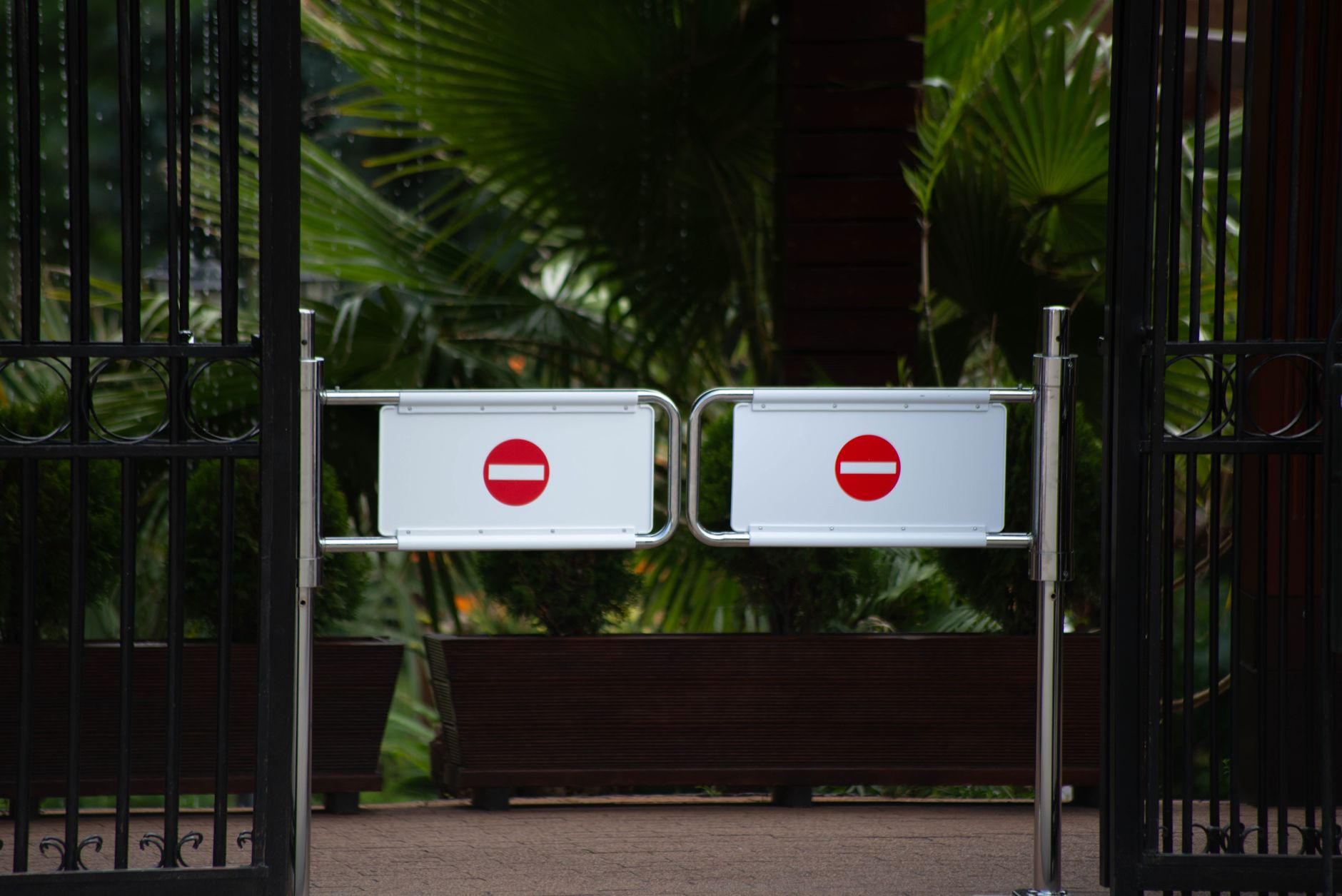
Free is normal here; secure is the thing you are buying
Unlike European capitals, almost no Nairobi hotel charges a resident guest for parking. What varies enormously is the compound. The standard at four-star level is a boom gate on the access road, a guard who checks the boot and runs a mirror under the chassis, a card-operated basement or a walled yard, floodlights and a night patrol. At the KSh4,000-7,000 guesthouse level it can mean a strip of murram inside a gate that is propped open for deliveries all evening. The price difference between those two experiences is often only KSh3,000 a night, which is the cheapest insurance in the city.
Ask the questions that matter rather than the one on the booking form. Is the parking inside the perimeter wall or on the verge outside it. Is there a guard on the gate between midnight and 5am, or does the day askari go home. Are the bays overlooked by rooms or by a blank wall. Can you leave a vehicle for three days while you go to Naivasha or the Mara, and does anyone sign for it. A hotel that answers these crisply is telling you it has thought about the problem; one that says only parking is free has not.
Westlands and Parklands: basements, and the 7pm bottleneck
The high-rises off Waiyaki Way, Chiromo Lane, Peponi Road and Ring Road Westlands have the best physical security in Nairobi: multi-level basements behind a boom, screening on the ramp, CCTV and a lift straight to the room floors. Rooms run KSh14,000-30,000 and parking is free for guests. The friction is volume. These basements also serve restaurants and rooftop bars, so between 7pm and 10pm on a Friday the ramp queues onto the street and the attendant will double-park you. Ask for a reserved resident bay at check-in and take the key card that opens the basement door directly.
Parklands, along Third, Fourth and Sixth Avenue, is the KSh6,000-12,000 tier and mostly uses walled surface compounds rather than basements. These are genuinely fine — gated, lit, guarded, with the owner living upstairs in many cases — and they are far easier to reverse a big vehicle into than a 1990s basement with support columns every four metres. The catch is that space is finite: a 20-room hotel with eight bays will let the ninth car block the eighth. If you plan on early departures for Nanyuki or Naivasha, tell reception the night before so you are not the blocked-in car at 5.30am.
Gigiri, Runda and Muthaiga: the easiest driving in Nairobi
Nothing in the city parks a car more comfortably than the diplomatic belt. Compounds here are half an acre or more, gates are electric, guards are contracted from established security firms, and the roads inside Runda and Muthaiga are quiet enough that a visitor can actually reverse without an audience. Rates land at KSh12,000-25,000 for guesthouses and small hotels, breakfast included, with unlimited free parking and space for a roof-tented 4x4 or a trailer, which almost nothing in Westlands can take. This is where I would leave a vehicle while flying out to the coast or a conservancy.
The trade-off is the commute and the surfaces. Limuru Road southbound in the morning is one of Nairobi's worst peaks, and the inner estate roads in Runda are murram in places, so a low saloon takes a beating in the long rains around April. Drive out via Ruaka and the northern bypass rather than fighting into town if your day is in Westlands or Gigiri anyway. If you need the CBD daily, this is the wrong base no matter how good the parking, and you should be in Upper Hill or Kilimani instead.
CBD hotels: the one area where parking is a genuine problem
Downtown hotels around Kenyatta Avenue, Moi Avenue, Kimathi Street and Standard Street were built when far fewer guests drove. Many have six to fifteen bays for eighty rooms, and the overflow is county-controlled street parking at roughly KSh200 for the day, with clamping enforced by mid-morning and nothing at all after 6pm. Room rates of KSh8,000-16,000 look excellent until you realise you are moving the car twice a day. If you are staying centrally and driving, choose one of the landmark hotels with a dedicated walled yard behind the building and confirm a bay by name on the reservation.
The better plan for a central trip is to stop driving. Leave the car at a hotel with a proper compound in Upper Hill, Kilimani or Westlands and use ride-hailing into the CBD, where a trip from Kilimani runs roughly KSh350-700 depending on time of day. You avoid the one-way system around City Hall Way, the enforcement, the risk of a smashed quarter-light on a side street, and the tedium of the evening exit onto Uhuru Highway. Central Nairobi rewards walking and being dropped off; it punishes the driver almost every single time.
Karen, Langata and the overlander question
Karen and Langata are where you go if the vehicle is the point: high-clearance 4x4s, roof tents, trailers, motorcycles on long African runs. Cottage stays and small lodges at KSh8,000-20,000 sit on one- to five-acre plots with gated compounds, room to swing a trailer, hard standing to work on a truck, and staff who are entirely unbothered by a wheel-off maintenance day. Several yards in this corridor cater specifically to overland travellers with long-stay vehicle storage at modest monthly rates, and they are the standard answer for anyone leaving a truck while flying home for a month.
Two honest caveats. Karen is 18-20km from the centre with two congested arteries, Ngong Road and Langata Road, so budget an hour each way in the peaks even though the Southern Bypass helps. And a compound this large needs real staffing at night; ask how many guards are on and whether the perimeter is wall or hedge, because a hedge on a five-acre plot is decorative. Where Karen wins outright is proximity to Nairobi National Park's main gate, roughly 10-15 minutes, which matters if you plan a 6am self-drive game run.
Airport corridor and long-stay storage while you travel
The JKIA hotel cluster and the Mombasa Road strip have the best-lit, most systematically guarded surface parking in Nairobi, because they run 24-hour crew operations. Rooms at KSh12,000-22,000 include free parking and, crucially, most will store a guest vehicle for the duration of a safari at no charge or a nominal KSh500-1,000 a day if you are returning to the hotel afterwards. Get it in writing on the booking confirmation, hand over a copy of the logbook details at reception, photograph the odometer and all four corners, and take the keys with you rather than leaving them at the desk.
Compare this against JKIA's own long-stay car park, which is secure and metered and adds up quickly across a week away. The hotel option usually wins on price and always wins on convenience, because it comes with a shuttle to the terminal, which for a 5am departure is worth more than the money. What I would not do is leave a vehicle at an unattended airport-adjacent lot advertised by a tout at the roundabout: the saving is a few thousand shillings and the exposure is your entire trip.
The verdict, and three things to skip
Ranked purely on parking: Gigiri and Runda first for space, gates and guards; the airport corridor second for lighting, systems and long-stay storage; Westlands third for basement security if you can live with the evening ramp; Karen fourth and first if you drive a big vehicle; Parklands fifth on value; Kilimani and Upper Hill sixth as the workable central compromise; and the CBD last. If you want one booking that solves everything, take a Gigiri or Rosslyn guesthouse at KSh15,000-20,000, park inside the wall, and accept the Limuru Road commute as the price.
Skip street parking overnight anywhere in Nairobi, including outside your hotel gate, no matter what the night guard says. Skip valet arrangements where your keys sit in an unlocked drawer at reception; ask for a numbered board or keep them. And skip the assumption that a five-star rate buys a better compound than a well-run KSh10,000 guesthouse in Runda — in this city the wall, the gate and the guard roster matter far more than the star rating, and the guesthouse frequently has all three plus room to turn around.
Questions, answered
Do Nairobi hotels charge for parking?
Almost never for resident guests. Free parking is the default from KSh4,000 guesthouses to KSh40,000 five-stars. What you are actually choosing between is a gated, lit, guarded compound inside the perimeter wall and an unguarded strip of ground outside it, and that difference is worth paying a few thousand shillings a night for.
Can I leave my car at the hotel while I go on safari?
Yes, and most hotels in the airport corridor, Gigiri and Karen will do it free or for roughly KSh500-1,000 a day if you are returning as a guest. Confirm it in writing on the booking, photograph the vehicle and odometer, keep the keys yourself, and check the compound has overnight guards, not just daytime.
Is it worth driving in Nairobi at all as a visitor?
Only if you are going to Karen, Nairobi National Park, Naivasha or Nanyuki. For CBD, Westlands and Kilimani days, ride-hailing at roughly KSh350-800 a trip beats parking, one-way systems and enforcement. Many visitors take the middle road: a driver-hired car for out-of-town days and ride-hailing in the city.
Which area is best for a big 4x4 or a roof tent?
Karen and Langata, then Runda and Muthaiga. Plots there are large, gates are wide, surfaces are hard enough to work on, and staff are used to overland vehicles. Westlands basements are the worst fit: ceiling clearance under two metres and support columns that make manoeuvring a long-wheelbase vehicle genuinely awkward.
Doing good is the business: every booking through Stay Nairobi funds one verified tonne of carbon removal — same room, same price, no markup.
Start your search