
Seasons & events
Jacaranda season in Nairobi: when the city turns purple and where to see it
From late September to early November, roughly six weeks, Nairobi's jacarandas bloom across Riverside, Loresho and Muthaiga — and the best two hours to photograph them are 06:45 to 08:45.
When it actually happens
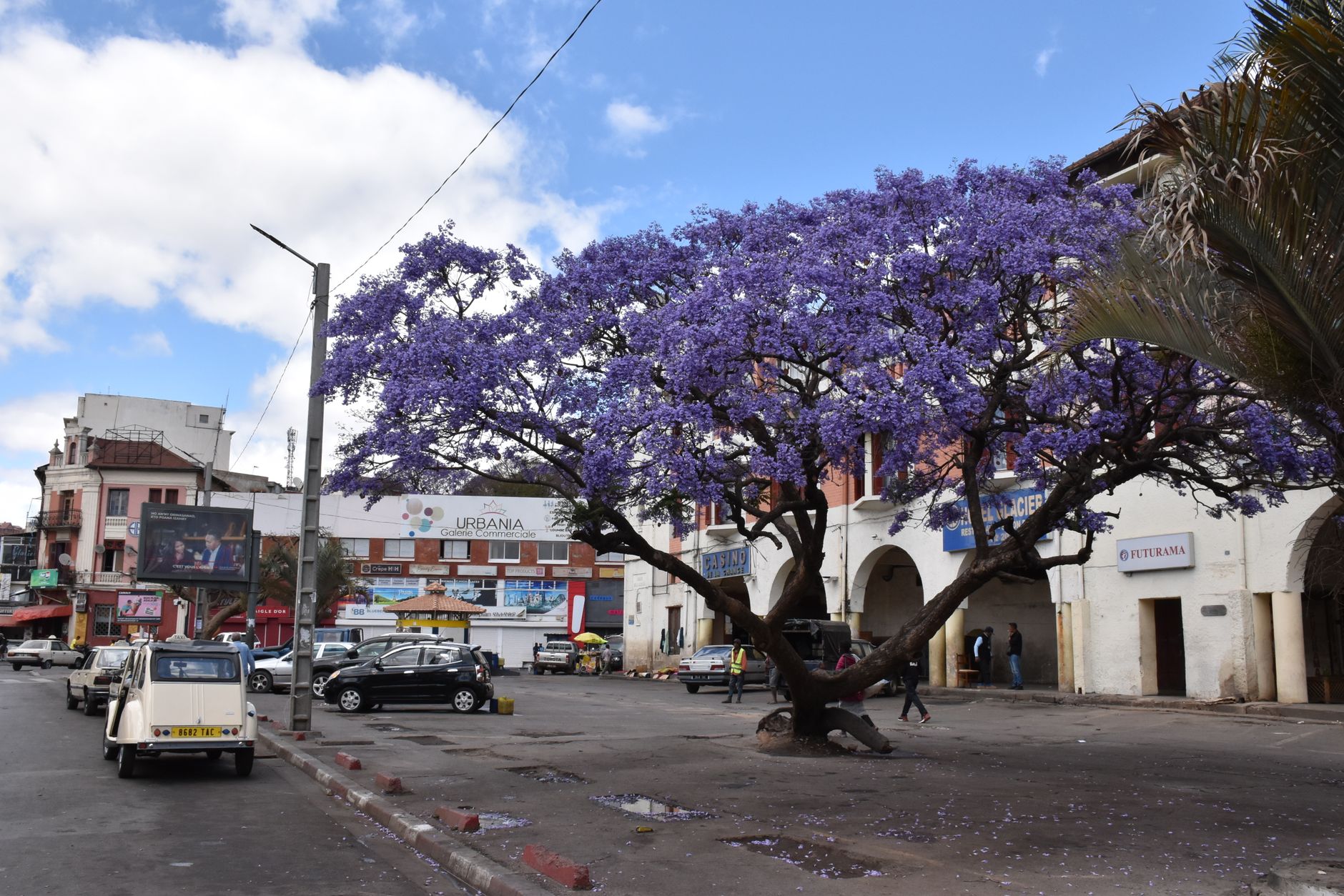
The jacaranda flush begins in the last week of September, builds through the first fortnight of October and usually peaks between about 10 and 25 October, holding into early November before the short rains strip the flowers. Trees do not all turn at once: the sheltered, warmer pockets in Milimani and the CBD go first, the higher and cooler ridges in Loresho, Lavington and Muthaiga follow a week or two later. That staggering is useful, because a visit anywhere in the second half of October will find something in full colour somewhere in the city.
Year to year the timing shifts by a week or so depending on how the short rains behave, and a heavy early October storm can bring the petals down fast. Some years produce a lighter second flush in late November or December. The reliable planning rule is to book for 12 to 22 October if the blossom is the reason for the trip, and to accept that this collides with Nairobi's conference peak, so rooms will not be cheap that fortnight. Come in the first days of November instead and you trade some colour for KSh4,000 a night.
The streets that deliver
Riverside Drive, running west off Chiromo Road below Westlands, is the classic: a long, curving avenue lined with mature jacarandas that arch over the tarmac, best walked from the Chiromo end early on a Sunday when the traffic is thin. State House Road and State House Avenue, between Kilimani and the university, have the tallest and oldest specimens in the city, with a purple carpet on the pavements after any breeze. Dennis Pritt Road and the streets between Milimani and Ngong Road hold dense clusters and are quieter to photograph.
Further out, Loresho Ridge above Waiyaki Way and the residential grid of Muthaiga give you jacaranda against big gardens and hedges rather than tarmac, which photographs quite differently — more park than boulevard. Lavington's James Gichuru Road and the older streets around Kileleshwa carry good numbers too. In the CBD, the University of Nairobi main campus and the trees along parts of Kenyatta Avenue and University Way provide the version most Nairobians actually see, purple against concrete and matatus, which is a better picture than the manicured suburbs.
The parks and forests worth the entry fee
The Nairobi Arboretum off State House Road is the single best-value stop: a few hundred shillings for citizens and roughly KSh600 for non-resident adults, with labelled trees, mown lawns and enough jacaranda to fill a morning, plus Sunday crowds of families and church groups that make it feel like the city rather than a garden. City Park in Parklands is older, wilder and free-feeling, with colobus-free but noisy vervet troops, and its avenues of mature exotics come into their own in October. Both are walkable circuits of an hour or two.
Karura Forest, off Limuru Road and Kiambu Road, is mostly indigenous rather than ornamental, so it is not the place for a purple canopy — but the October air after a short-rains shower is exceptional there, and the waterfall and caves make a better half-day than the blossom hunt does. Entry is about KSh600 for non-residents and KSh100 for citizens. If you have one morning and want both trees and a walk, do the Arboretum; if you want a proper forest, do Karura and see the jacarandas from the car on Limuru Road.
It is not only jacaranda
Nairobi's flowering-tree calendar runs wider than most visitors realise. The Nandi flame, with its scarlet cup-shaped flowers, colours up from August into October and is scattered along Ngong Road, Argwings Kodhek Road and in Karen gardens. The cape chestnut, an indigenous species with dense pink-mauve heads, flowers around September into November and is common in Lavington, Kileleshwa and around the Arboretum. Together they give you a red, pink and purple sequence rather than a single event, and the cape chestnut in particular is the one photographers miss.
Add bougainvillea, which flowers year-round but goes hardest in the dry months on the walls of Muthaiga, Runda and Karen, and the flame trees along parts of the CBD. If you want to identify what you are looking at, the Arboretum's labelled plantings are the fastest education available in Nairobi, and the Nairobi National Museum's botanical galleries on Museum Hill fill in the rest for around KSh1,500 non-resident adult entry. Skip the private garden tours advertised to visitors; the streets do it better and cost nothing.
Getting the photograph
Light is everything and Nairobi gives you a narrow window. Sunrise is around 06:20 in October, and the good raking light on tree-lined avenues runs from about 06:45 to 08:45, before the sun climbs high enough to flatten everything. Late afternoon works from 16:45 but October cloud often builds by then. Midday is unusable: harsh, contrasty and hazy, since late September and October carry dust that softens distance and washes out blue sky. Shoot down the length of an avenue rather than across it, and expose for the flowers rather than the sky.
Practicalities matter more than technique here. Nairobi's residential streets are private-security territory — Riverside, Muthaiga, Loresho and Runda all have guards on gates who will ask what you are doing, politely, and are satisfied by a straight answer. Do not photograph into compounds, do not set up a tripod outside a diplomatic residence, and keep the camera down near government buildings in the CBD. Take a car and driver for a two-hour circuit, at roughly KSh3,500 to KSh6,000, and cover four neighbourhoods rather than trying to walk between them.
Where to stay to be inside the colour
For walkable blossom, base in Milimani or the northern edge of Kilimani: State House Road, Dennis Pritt Road and the Arboretum are all within 15 to 25 minutes on foot, and the area is dense with mid-range hotels and serviced apartments at KSh7,000 to KSh13,000 outside conference weeks, more like KSh10,000 to KSh16,000 in mid-October. Westlands puts you a short walk from Riverside Drive and gives you the widest dining choice, at KSh12,000 to KSh22,000 for a four-star room in season.
Gigiri and Runda are surrounded by trees but are the most expensive beds in the city in October, at KSh30,000 to KSh55,000, and there is little reason to pay that for flowers you can drive to. Karen is green, calm and good for Nandi flame and garden trees, but the jacaranda avenues are elsewhere and you will spend 40 minutes each way getting to them. My pick for a blossom trip is a serviced apartment in Kileleshwa or Milimani at around KSh9,000 to KSh12,000, with a driver booked for two early mornings.
The catches, and the month either side
Three honest drawbacks. October is Nairobi's dustiest, haziest month before the short rains break, so distant views are poor and anyone with dust or pollen sensitivity will notice it. The flowers themselves are sticky and drop constantly, coating parked cars in a sap that dries hard, which is why nobody in Riverside parks under a tree. And the peak fortnight sits squarely inside conference season, when the same room costs KSh4,000 to KSh10,000 more than it does in September or late November.
So consider the shoulders. Late September gives you the early trees in Milimani and the CBD, dry warm weather, and hotel rates a third lower — a genuine bargain fortnight. Early to mid-November gives you the tail of the bloom, the first short-rains storms clearing the dust, petals washed into purple drifts on wet tarmac, and mid-range rooms back at KSh6,500 to KSh10,000. If I had to name one week for the combination of colour, air and price, it would be the first week of November.
Questions, answered
When exactly do Nairobi's jacarandas peak?
Usually between 10 and 25 October, though the flush starts in the last week of September and can hold into early November. Warmer low-lying areas like Milimani and the CBD colour up first; higher ridges in Loresho, Lavington and Muthaiga follow by a week or two.
What is the best single street for jacaranda photographs?
Riverside Drive off Chiromo Road, walked from the Chiromo end between 06:45 and 08:45 on a Sunday, when traffic is light and the low sun rakes down the avenue. State House Road has older, taller trees and a heavier carpet of fallen flowers on the pavements.
Is it safe to walk around photographing in residential Nairobi?
On the main tree-lined roads in daylight, yes, with normal care and preferably not alone. Private security guards on gates will ask what you are doing; answer straightforwardly and avoid pointing lenses into compounds or at diplomatic residences. Use a car and driver, around KSh3,500 to KSh6,000 for two hours, to move between neighbourhoods.
Doing good is the business: every booking through Stay Nairobi funds one verified tonne of carbon removal — same room, same price, no markup.
Start your search