
Culture & sights
A long weekend in Nairobi with kids under 10: an hour-by-hour plan
Four days, eleven stops and a hard 4pm rule about being off the roads, planned around nap windows, feeding times and the two hours a small child will actually tolerate in a car.
The two constraints that shape everything
Nairobi with small children is governed by traffic and by fixed hours. Almost every animal attraction here runs to a timetable — the elephant orphanage opens to the public for one hour at 11am, the Bomas dance performance starts at 2.30pm on weekdays, giraffe feeding stops mid-afternoon — and almost every drive between neighbourhoods takes twice as long between 7-9am and 4.30-7pm. Build the day around one fixed booking and accept that you will do two attractions, not four.
The second constraint is altitude and weather. Nairobi sits at 1,795 metres, so the sun burns fast even at 22°C and children dehydrate quicker than parents expect; carry two litres of water and a hat per child, and reapply sunscreen at midday. Evenings drop to 11-14°C in July and August, which surprises families who packed for equatorial heat. Rain comes in a 3.30-6pm block in April and November. The plan below is therefore morning-heavy, with the afternoons in places that work wet or dry.
Friday afternoon: land soft in Langata
Assume a mid-morning arrival at JKIA. Do not attempt anything ambitious on day one. Transfer to your base — 30-50 minutes to Karen or Langata via the Southern Bypass, or 45-75 minutes to Gigiri — and let everyone sleep off the flight until 2pm. Then walk, don’t drive: both Karen and Langata have quiet residential lanes with jacaranda shade, and a two-hour ramble with an ice cream at the end does more for jet lag than any attraction.
If you have energy at 3.30pm, the Nairobi Safari Walk on Langata Road is the softest possible introduction: a raised timber boardwalk over 1.5 kilometres through habitats holding albino zebra, pygmy hippo, rhino and big cats, all of it stroller-friendly and shaded. Non-residents pay around KSh2,900 an adult with children roughly half; citizens pay a few hundred shillings. It is beside the Nairobi National Park main gate, closes at 6pm, and takes 75 minutes at a four-year-old's pace. Dinner early, lights out by 8pm.
Saturday: giraffes at 9am, elephants at 11am
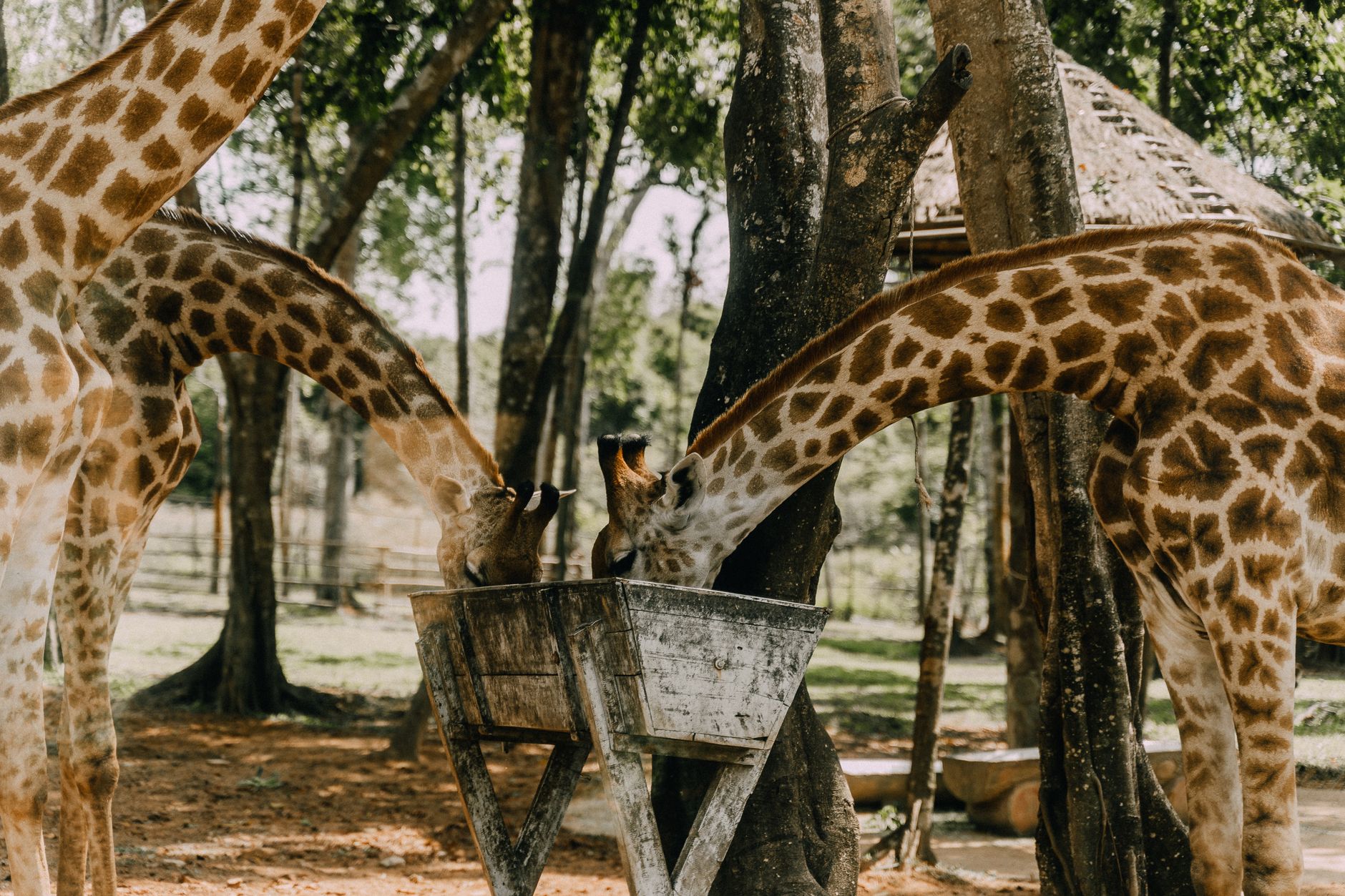
This is the big day and it is a tight relay. Be at the Giraffe Centre in Langata for the 9am opening, when the Rothschild's giraffes come to the raised feeding platform and there is no queue; entry is about KSh1,500 for non-resident adults and KSh750 for children, less for citizens. Buy the pellets, let the children feed from the palm, and give it 45 minutes plus 15 in the small warthog-and-forest-walk area. By 10.15am you must be moving.
The Sheldrick elephant orphanage on the park's Magadi Road edge opens to the public 11am-noon only, must be booked online days ahead, and asks a donation of about KSh1,500 a head. The orphaned calves come in for mud bath and milk while a keeper narrates each one's story; children who have gone glassy at museums are riveted. It is ten minutes from the Giraffe Centre. Afterwards, drive 15 minutes to a Karen garden restaurant with a lawn and a swing set — expect KSh1,200-2,500 a head — and let the afternoon go slack. Home by 3.30pm.
Sunday morning: Karura Forest on two wheels
Cross to the north side early — 8.30am on a Sunday, Nairobi's roads are almost empty and Karen to Karura takes 30 minutes instead of 70. Karura Forest is 1,000 hectares inside the city, with entry around KSh600 for non-residents and KSh100-200 for citizens, and bicycles for hire at roughly KSh500-700 an hour including small frames and helmets. The gravel tracks are wide, flat and closed to traffic, which makes this the only place in Nairobi where a seven-year-old can ride freely.
Ride to the Ruaka river waterfall — 15 metres, with a viewing deck — and then the Mau Mau caves, which are shallow, safe and exactly spooky enough. Allow two hours, add a picnic on the marsh boardwalk, and note that the whole loop is buggy-passable if you stick to the main tracks. The café at the main gate does breakfast for KSh600-1,000 and has a small play area. Leave by 11.30am. This is also the best rainy-morning option in the city, since the gravel drains within an hour.
Sunday afternoon: Gigiri's indoor fallback
You are already north, so stay north. The Village Market complex in Gigiri is 15 minutes from Karura and is the most child-shaped building in Nairobi: outdoor water slides at roughly KSh500-800 a child, ten-pin bowling at KSh600-900 a game, a mini-golf course, a cinema and a large food court. It is also entirely covered where it needs to be, which matters in April and November. Budget KSh1,200-2,500 a head for lunch and another KSh2,000-3,000 on activities for two children.
The alternative, if your children are older or the weather is glorious, is the Ferris wheel and boating lake at the Ruaka mall complex ten minutes further out, or the indoor ice rink on Mombasa Road at KSh1,300-1,800 a session including skate hire — the only rink in East Africa, absurd at the equator, and a guaranteed hour of delight. Choose one. Do not attempt Gigiri in the morning and Mombasa Road in the afternoon; that is 25 kilometres of Sunday driving and a meltdown in the back seat.
Monday morning: one last animal, then out
If your flight is evening, spend the morning at the crocodile and camel park in Karen — camel and pony rides at KSh300-600 a turn, crocodile feeding, an ostrich pen and a snake house, all in an hour and a half and none of it precious. It costs around KSh1,000-1,500 for non-resident adults. If your flight is midday, do the Nairobi Arboretum instead: 30 hectares of labelled trees, resident colobus and Sykes' monkeys, entry a few hundred shillings, and a ten-minute drive from Kilimani.
For the airport, allow two hours door to gate on a weekday and 90 minutes on a Sunday. A ride-hail from Karen runs KSh1,800-3,000, from Gigiri KSh2,500-3,500, and the Nairobi Expressway toll of KSh120-360 is worth paying if you are on Mombasa Road after 3pm. Ask for a car with seatbelts in the back when you book — many taxis here have them buried under the seat cover — and carry your own booster if you are travelling with a child under five.
Where to sleep each night, and what to skip
Pick one base and stay in it all four nights; moving with small children costs you half a day. Karen and Langata are the strongest choice for this itinerary: garden guesthouses and cottage-style rooms with lawns, pools and space at KSh8,000-20,000, ten minutes from the giraffes and the elephants, and quiet at night. Gigiri and Runda at KSh10,000-22,000 suit families whose plan is Karura and Village Market, and have the most reliable hot water and generators. Kilimani at KSh7,000-13,000 is the budget pick and the noisiest.
Skip a full Nairobi National Park game drive with under-fives — it is three to four hours in a vehicle with no toilet stops and a real chance of seeing nothing but zebra, and the Safari Walk gives the same animals in 75 minutes. Skip the Maasai markets with a toddler in tow; the selling pressure is relentless. Skip any 5pm cross-town booking. And skip trying to see Karen and Gigiri on the same day — they sit on opposite sides of the city and the road between them is the one that fails first.
Questions, answered
What ages does this plan suit best?
Three to nine. Under three, drop the Karura bike ride and the Bomas performance and keep to the Safari Walk, the Giraffe Centre and a hotel pool. Over ten, children can handle a full Nairobi National Park drive at 6.30am, which changes the Saturday shape entirely and is worth the earlier alarm.
Do we need vaccinations or malaria tablets for Nairobi with children?
Nairobi at 1,795 metres is effectively malaria-free, and most families skip prophylaxis for a city-only stay — but ask a travel clinic, especially if you add Naivasha or the coast. Yellow fever proof is required if you arrive from an endemic country. Routine childhood vaccinations plus typhoid and hepatitis A are the standard advice.
Is tap water safe for kids?
Don’t chance it. Nairobi's municipal water is treated but the delivery is inconsistent, and hotels supply bottled or filtered water free or at KSh100-200 a bottle. Use it for teeth-brushing with under-fives too. Ice in established restaurants and hotels is made from filtered water and is fine.
What's the best month for a family long weekend?
Late January to early March, or July to early October. Both are dry, with daytime highs of 22-26°C. July and August are cool and grey but rain-free, which is ideal for outdoor days. Avoid the second half of April, when heavy afternoon rain will cost you at least one planned outing.
Doing good is the business: every booking through Stay Nairobi funds one verified tonne of carbon removal — same room, same price, no markup.
Start your search