
Area guides
Nakuru area guide: where to sleep for the park and the crater
Kenya's fourth city puts a comfortable double at KSh4,000-9,000 and a national park gate 2km from the town centre, which makes it the cheapest place in the country to wake up near wild rhino.
Who Nakuru suits
Nakuru is 160km northwest of Nairobi, sits at about 1,850m in the floor of the Rift Valley, and is a real city rather than a tourist settlement: banks, universities, a large market, a heavy industrial edge and traffic to match. That works enormously in a traveller's favour, because the hotel stock is priced for Kenyan business travellers and conference delegates, not for safari-goers. You can sleep in a decent room with hot water, wifi and breakfast for KSh4,000-6,000 and be at the Lake Nakuru National Park main gate in ten minutes.
It suits self-drivers, budget safari travellers, families who want a park day without a lodge bill, and anyone building a Rift Valley loop with Naivasha. It does not suit people who want a lodge experience with sundowners and a fire, because the town hotels are functional and the in-park properties are few and expensive. It also disappoints visitors expecting the flamingo spectacle from old photographs, which has not been reliable here since the lake rose sharply from 2013 onward and drowned much of the shoreline the birds fed on.
Getting there and getting around
By road it is two and a half to three hours from Nairobi on the A104 via Naivasha and Gilgil, longer where dualling works are active. Matatus and shuttle buses from the River Road stages cost KSh600-1,000 and take roughly three hours; the fourteen-seaters are faster and the larger buses more comfortable. Coming from Naivasha it is only 70km, about an hour, which is why the two pair so naturally on a three-day loop.
In town, boda bodas cost KSh50-150 for short hops and matatus KSh30-50. Ride-hailing operates but with far fewer cars than Nairobi, so expect waits of ten to twenty minutes at busy hours. For the park you need a vehicle: a hired safari van or 4x4 with driver from town runs KSh8,000-15,000 for a half-day game drive excluding entry fees, and this is the standard way visitors without their own car do it. Do not plan on entering the park by boda boda; it is not permitted.
Where in the city to base yourself
The city centre around Kenyatta Avenue and Oginga Odinga Avenue holds the cheapest usable rooms, KSh2,500-5,000, in multi-storey hotels above shops. They are secure and central, close to the market and the bus stages, and noisy from about 6am. Good for one night in transit, tiring for three. Ask for a room off the street and check the water is hot in the evening as well as the morning.
Milimani and Section 58, the leafier residential districts west and south of the centre, are where the mid-range guesthouses and small hotels sit at KSh5,000-9,000, usually with gardens, parking, a restaurant and quiet nights. This is the sensible default. Along the Nairobi road at Lanet there is a run of larger hotels and conference resorts, KSh7,000-14,000, with pools and grounds; they suit families and self-drivers who want to enter the park via Lanet Gate and never touch the city centre. Njoro road, out toward Egerton, is a quieter alternative with a couple of country-style guesthouses.
Lake Nakuru National Park, gates and fees
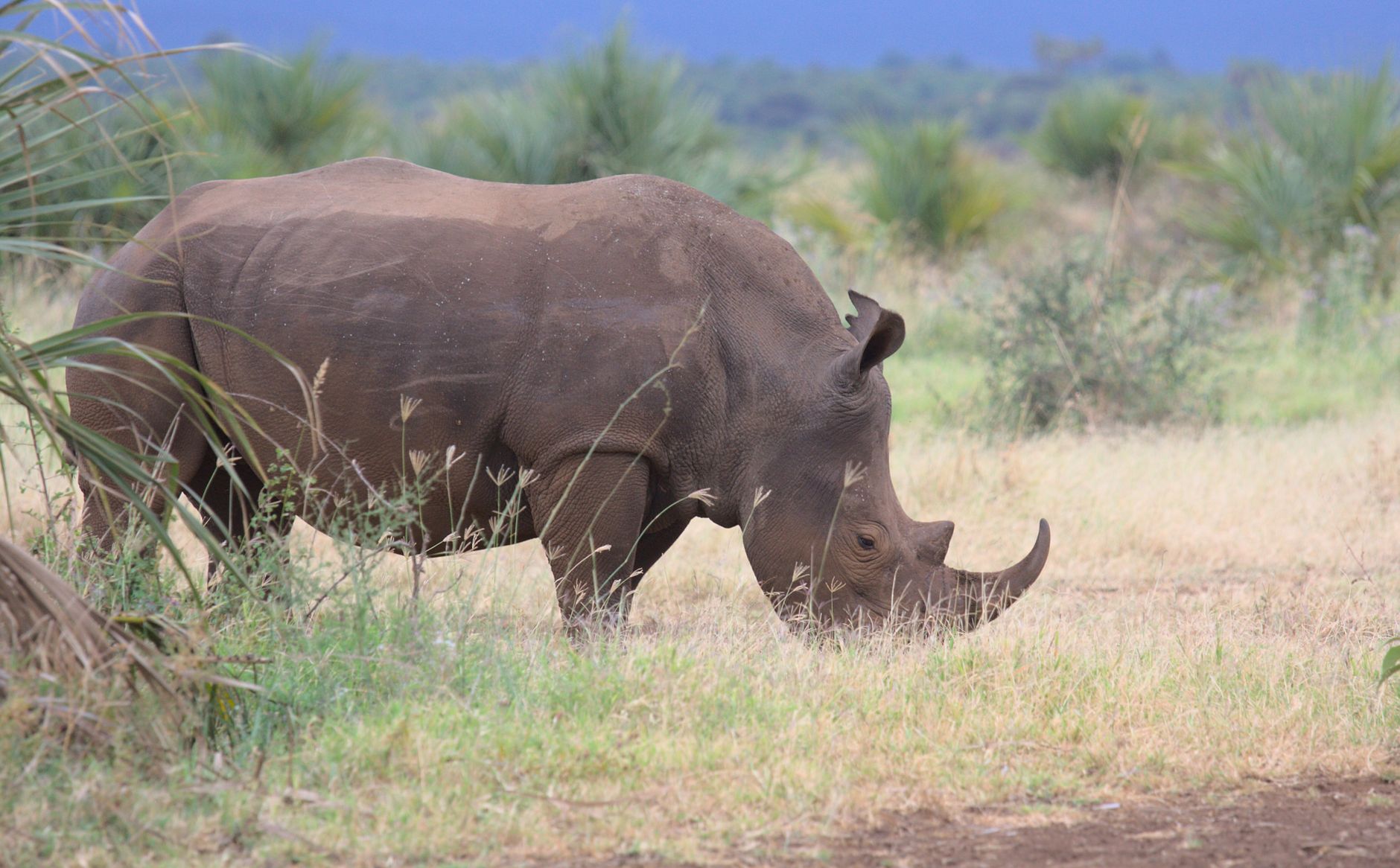
The park is 188 square kilometres of acacia woodland, yellow-bark fever trees and lakeshore, entirely fenced, and it is the single best place in Kenya to see both black and white rhino in one morning. There are also Rothschild's giraffe, buffalo, waterbuck, and a genuine chance of leopard in the euphorbia forest on the eastern escarpment. Lion are present but shy. Baboon Cliff and Out of Africa lookout give the classic view across the water; go early, when the light is low and the escarpment is not yet in haze.
The main gate is about 2km from the centre of town, which is unmatched convenience for a Kenyan national park. Lanet Gate serves the Nairobi road side and Nderit Gate the south. Non-resident entry sits in the region of KSh7,000-8,000 per adult per day, with children roughly half, and the fee is card-payable at the gate rather than cash. Vehicle entry adds a few hundred shillings for a Kenyan-registered car. Budget a half day: three hours from 6.30am covers the lake circuit, the cliffs and the rhino areas without rushing.
Menengai, Hyrax Hill and the rest of the day
Menengai Crater, 8km north of the centre, is one of the largest calderas in the world at roughly 90 square kilometres, and the viewpoint on the rim is free or close to it, reachable by car in twenty minutes or on foot up a long hot climb. Steam vents from the geothermal field drift across the crater floor. Go in the morning before cloud builds. Hyrax Hill prehistoric site, 4km out on the Nairobi road, is a small museum with Neolithic settlement remains and a burial mound, worth an hour and a few hundred shillings.
Lake Elementaita, 25km back toward Nairobi within the Soysambu Conservancy, is the reliable flamingo lake now and has the Sleeping Warrior hill on its skyline; conservancy entry and a guided drive are cheaper than the national park. Egerton Castle at Njoro, 25km southwest, is an odd, atmospheric colonial folly with a small entry fee. What I would skip is the Nakuru town nightlife circuit unless you specifically want it; the bars are loud, cheap and firmly local, and nothing about them requires a visitor to make the effort.
Eating and what things cost
Nakuru eats well and cheaply. A plate of nyama choma with ugali and kachumbari at one of the roast joints off the Nairobi road or in the Free Area estate costs KSh600-1,000 for a generous half kilo of goat. Lunch of pilau, chapati or ugali with beef stew at a town cafe is KSh200-400. Hotel dinners run KSh800-1,800 for a main. Nakuru is also a serious agricultural town, so the produce market off Gusii Road is cheap and excellent for fruit if you are self-catering: mangoes, passion fruit and avocados for a fraction of Nairobi prices.
Beyond food, the maths of a Nakuru trip is straightforward. Two nights in a mid-range guesthouse at KSh6,000, a half-day park drive with a hired vehicle at KSh10,000 split between however many of you there are, two non-resident park entries at roughly KSh15,000, and meals at KSh1,500 a day per person. A couple can do a proper two-night rhino trip from Nairobi, transport included, for around KSh55,000-70,000, which is a fraction of what the same wildlife costs anywhere with a lodge attached.
Nakuru or Naivasha, and how long to give it
Choose Nakuru if you want animals. The park delivers rhino and giraffe with near-certainty, the accommodation is cheap, and the drive is only an hour longer than Naivasha. Choose Naivasha if you want water, cycling, a hike up Longonot and a lakeside camp under fever trees, and accept that the wildlife is scenery-scale rather than headline. Doing both takes three days and one road, and is the strongest short Rift Valley itinerary from Nairobi.
Two nights in Nakuru is the correct number: arrive in the afternoon, park at dawn on day two, Menengai and Hyrax Hill in the afternoon, leave on day three via Elementaita. One night works if you drive up early and accept a rushed morning. Three only pays off if you push further north to Lake Bogoria's hot springs and flamingos, which is another 100km and a genuinely different landscape. Book Milimani for quiet, Lanet for a pool and easy park access, and the city centre only if you are in transit.
Questions, answered
Will I see flamingos at Lake Nakuru?
Sometimes, but not the millions of the famous photographs. Rising water levels since 2013 changed the lake chemistry and the big flocks moved to Bogoria and Elementaita. Come for the rhino, giraffe and escarpment views instead, and drive 25km to Elementaita if flamingos are the reason you are here.
How much is entry to Lake Nakuru National Park?
Non-resident adults pay in the region of KSh7,000-8,000 a day, children roughly half, plus a small vehicle fee. Payment at the gate is by card rather than cash. Rates are reviewed periodically, so check before you travel and carry the card in the name you booked with.
Can I visit the park without hiring a safari vehicle?
Only in your own car; walking, motorbikes and public transport are not allowed inside. If you arrived by matatu, hotels and operators in town arrange a half-day drive with driver-guide for KSh8,000-15,000 per vehicle excluding entry, which splits well among three or four people.
Is Nakuru city safe to walk in the evening?
The central streets are busy and fine until around 8pm, after which take a boda boda or matatu the short distances rather than walking, particularly around the bus stages. Standard precautions apply: no visible phone, no bag on your outside shoulder, and agree the fare before you get on.
Doing good is the business: every booking through Stay Nairobi funds one verified tonne of carbon removal — same room, same price, no markup.
Start your search