
Budget & prices
How to get a SIM card and use M-Pesa in Nairobi as a visitor
Buy a local SIM within your first hour in Kenya — a starter line plus 30 days of data costs about KSh1,100, and it unlocks the mobile-money system that half of Nairobi runs on.
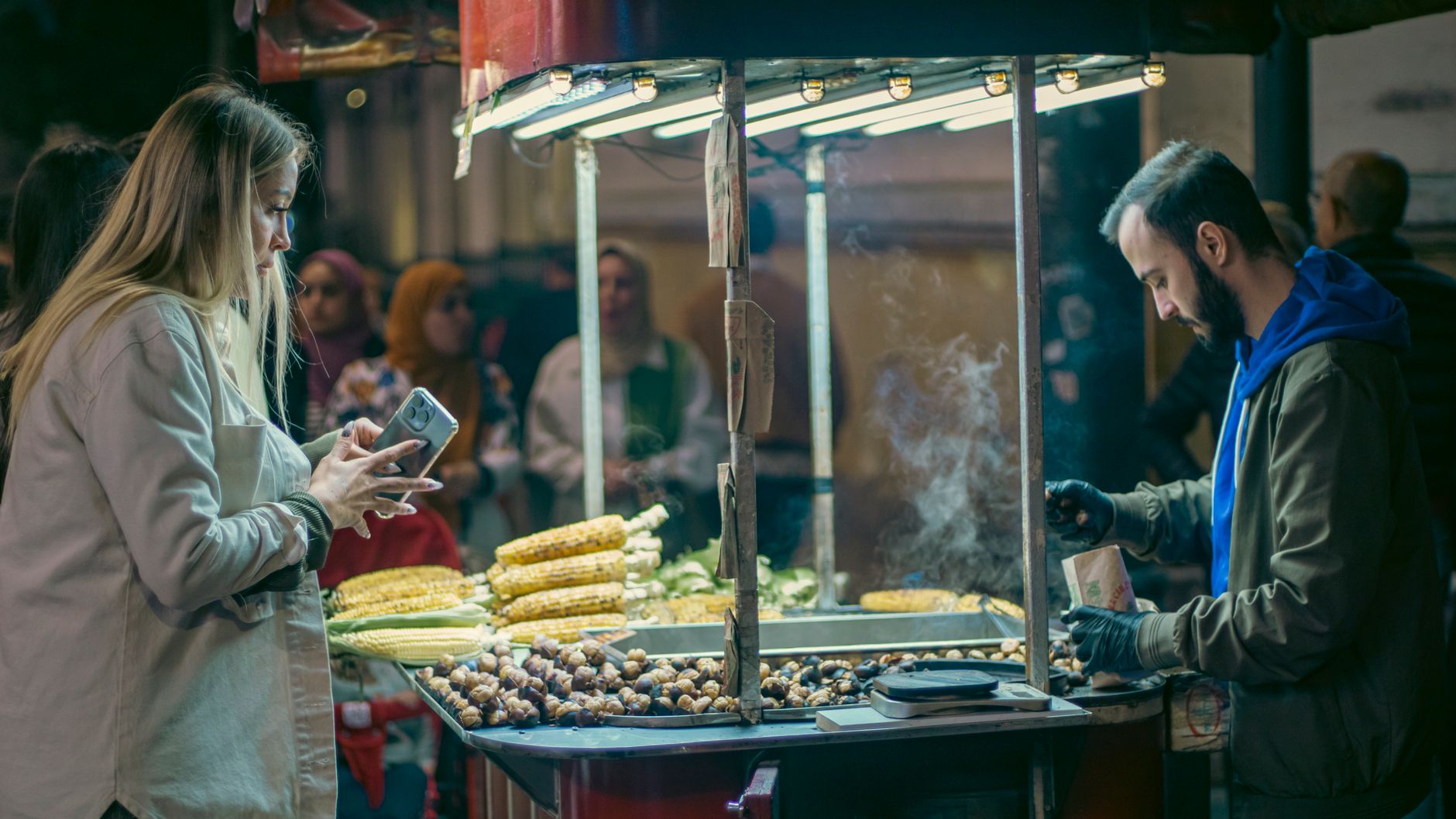
Get the SIM first, everything else follows
Foreign visitors can buy and register a Kenyan SIM on arrival, and you should. Safaricom and Airtel both have desks in the JKIA arrivals hall, open for the main flight banks, and Safaricom shops sit in Sarit Centre, Westgate, The Junction, Village Market and along Kenyatta Avenue. You need your physical passport; registration is biometric and takes 10-20 minutes. The SIM itself costs around KSh100-200. Do it at an official shop, not from a hawker on the street — an unregistered or someone-else's-name SIM cannot be linked to mobile money and will be cut off when the regulator sweeps.
Coverage decides which network. Safaricom has the deepest reach and is the only sensible choice if you are heading to Nanyuki, Naivasha or the Maasai Mara afterwards; Airtel is cheaper on data and perfectly fine inside Nairobi, Kiambu and along the main highways. Prices move, but the shape is consistent: roughly KSh1,000 buys 8-10GB valid a month on Safaricom, or 15-20GB on Airtel, with daily bundles from about KSh50-100. Both sell eSIM profiles at their shops if your handset supports it, with the same passport requirement. Buy more data than you think you need; hotel wifi in Nairobi is unreliable during power cuts.
What M-Pesa actually is, and why cash alone is awkward
M-Pesa is a mobile wallet that sits on your phone number, and in Nairobi it functions as the default currency layer. A matatu conductor, a nyama choma joint in Kilimani, a Karen plant nursery, a boda rider and a parking attendant all quote you a till number rather than reach for change. Trying to operate on notes alone is possible but constantly frictional: small traders genuinely do not carry float, and being handed a fistful of KSh50 coins or told to come back later is normal. With M-Pesa you pay the exact amount instantly and get an SMS receipt with the merchant name on it.
As a visitor you register the wallet at the same time as the SIM — it takes five extra minutes and the same passport. You will set a four-digit PIN; memorise it, because resetting it as a foreigner is tedious. The daily transaction ceiling for an ordinary account runs into the hundreds of thousands of shillings, far more than a traveller needs, and the wallet balance limit is similarly generous. If the shop assistant tells you visitor registration is not possible, you have the wrong assistant — ask for the supervisor or try a bigger branch.
Loading money into the wallet
The simplest route is cash. Depositing at any agent — the small kiosks with green or red livery on almost every street — is free of charge to you. Hand over notes, give your number, check the SMS confirms the exact amount before you walk away. Agents are everywhere in Westlands along Woodvale Grove, throughout Parklands, in every mall and outside every supermarket. Deposit in chunks of KSh10,000-20,000 rather than daily dribbles, because the walk to an agent is the only real friction in the system and the deposit itself costs nothing at all.
The cash has to come from somewhere, and that means an ATM. Equity, KCB, Absa, Stanbic, NCBA and Standard Chartered machines all take foreign Visa and Mastercard; per-withdrawal caps are commonly KSh20,000-40,000 and the local surcharge is typically KSh300-600 on top of whatever your home bank charges, so take the maximum each time. Always decline the machine's offer to convert to your home currency — accept the charge in KSh and let your own bank do the exchange, which is consistently cheaper. Use ATMs inside mall lobbies or bank branches rather than roadside machines after dark.
Paying with it: tills, paybills and pochi
Three payment types cover almost everything. Buy Goods, also called Lipa na M-Pesa, uses a five- or six-digit till number and is what restaurants, shops and bars use — it costs you nothing, and the merchant name appears on your confirmation, which is your proof of payment. Paybill uses a business number plus an account reference and is used by hotels, tour companies, utilities and some clinics; small customer charges may apply. Pochi la Biashara is a personal-trader wallet used by market stalls, boda riders and food vendors, where you effectively send to a number.
Sending money person-to-person carries a tariff of roughly KSh13 on KSh1,000 and about KSh55-60 on KSh10,000, which is what you will use for a guide, driver or Airbnb host. Withdrawing cash back out at an agent costs more — around KSh29 on KSh2,500 and roughly KSh70 on KSh7,500 — so plan to spend the balance rather than cash it out. Always read the confirmation SMS aloud before pressing send: the single most common error visitors make is transposing digits in a till number, and money sent to the wrong till is recoverable only through a slow reversal process.
Where cards still beat mobile money
Cards work smoothly in the environments built for them: mall supermarkets, chain coffee shops, mid- and upper-tier hotels, the bigger restaurants in Westlands, Kilimani and Karen, fuel stations, and the airport. Visa and Mastercard are near-universal in those places; American Express is accepted in only a handful of hotels and high-end restaurants, so do not rely on it as your only card. Contactless terminals are widespread. Larger purchases — a hotel bill, a safari balance, a tyre — are cleaner on a card than on mobile money, and give you a chargeback route that M-Pesa does not.
Where cards fail: the entire street economy, most matatus, boda bodas, small guesthouses, park gates that have gone offline, and any till in an area where the card network is down that afternoon. Card outages happen in Nairobi more often than in Europe or North America, usually briefly. The robust setup is all three layers — a card for big and formal, M-Pesa for everyday and informal, and KSh5,000-10,000 in notes in small denominations for the moments when both networks blink. Keep the notes split between two places, never all in one wallet.
Scams, fees and the etiquette of paying
The mobile-money scams targeting visitors are unimaginative and easy to spot. The classic is an SMS or call claiming money was sent to you by mistake, asking you to send it back — the original message is fake, so check your real balance before doing anything. Another is a caller claiming to be from the network, asking for your PIN or a code; no legitimate staff member will ever ask. At agent kiosks, insist on completing the transaction on your own phone rather than handing it over, and refuse any agent who wants a fee for a cash deposit, which is always free.
On etiquette: quote and confirm prices before the service, not after. With a boda or a market stall, agree the figure, then pay by till or pochi, then check the SMS. Kenyan traders are used to this rhythm and nobody finds it rude. Tipping a guide or driver through M-Pesa is normal and welcome, and it is often more convenient for them than cash. If a business gives you a Paybill and an account number, write both down; entering the account reference wrongly is the second most common visitor error and delays the hotel finding your payment.
Costs, budgets and what a week looks like
A realistic connectivity budget for a fortnight is KSh2,000-3,000 total: SIM, one generous monthly data bundle, a top-up, and a few small transaction fees. Against that, the wallet saves you real money by making it easy to pay exact fares and prices rather than rounding up because nobody has change. It also removes the need to walk around with visible cash, which matters more in the CBD and around market areas than in Westlands or Gigiri. If you are travelling with a partner, register one SIM each — sharing a wallet gets messy when you split up for the day.
Keep the balance modest. There is no reason to hold more than KSh20,000-30,000 in the wallet at any time; top up from the ATM as you go. Screenshot or note your key till numbers — hotel, regular driver, favourite restaurant — because retyping them at speed invites errors. And if your phone is stolen, call the network immediately to freeze the line and wallet; with your passport you can get a replacement SIM on the same number at any branch, usually the same day, which is why buying at an official shop in the first place matters.
Leaving: what to do with the leftovers
Spend down the wallet rather than cashing it out. Withdrawal fees at agents rise with the amount, and airport exchange rates on leftover shillings are poor, so the elegant exit is to pay your final hotel night, your airport transfer and your departure-lounge coffee from M-Pesa. Kenyan shillings are also awkward to change abroad, so avoid ending the trip with a wad of KSh1,000 notes. If you have a genuine surplus, small denominations are useful for tips on the way out and for the airport porters who help with bags at kerbside.
Prepaid Kenyan lines stay active for months of inactivity, so if you expect to return within the year, keep the SIM rather than discarding it — the wallet, your PIN and your registration all survive, and you skip the queue next time. Note the number somewhere retrievable; travellers routinely lose the one piece of information that would have saved them 20 minutes at the Safaricom counter. Finally, unlink nothing and share nothing: your PIN is the only security on the wallet, and it should not be written on the SIM pack in your bag.
Questions, answered
Can a tourist really register for M-Pesa without a Kenyan ID?
Yes. A valid passport is accepted for both SIM registration and mobile-money registration at any operator-owned shop, including the desks at the airport. The process is biometric and takes 15-25 minutes for both together. Small third-party dealer kiosks sometimes claim otherwise; go to a branded flagship shop in a mall instead.
Is it cheaper to pay by card or by M-Pesa?
For you, paying a merchant by Buy Goods till is free, while a card carries whatever foreign-transaction fee your home bank applies, typically 1-3 percent. M-Pesa costs appear on person-to-person transfers, about KSh13 on KSh1,000, and on cash withdrawals. Use tills for shops, cards for large hotel bills.
Do I need a SIM at all if my hotel has wifi?
You will want one. Ride-hailing apps need data on the street, power cuts take hotel wifi down with the router, and drivers, guides and restaurants communicate by WhatsApp and phone calls to a local number. A month of data costs about KSh1,000, which is less than one surge-priced taxi ride.
What should I do if I send money to the wrong till number?
Act immediately. Dial the network's reversal shortcode or call customer care with the transaction code from your SMS and request a reversal. If the recipient has not withdrawn the funds, it is usually resolved within a day. This is exactly why you read the confirmation prompt before pressing send.
Doing good is the business: every booking through Stay Nairobi funds one verified tonne of carbon removal — same room, same price, no markup.
Start your search