
Hotel round-ups
Tented camp stays near Nairobi, ranked
Nine kinds of canvas stay within a four-hour drive of the city, from a camp inside Nairobi National Park to Rift Valley lakeside tents — ranked by drive time, price band and how cold the nights actually get.
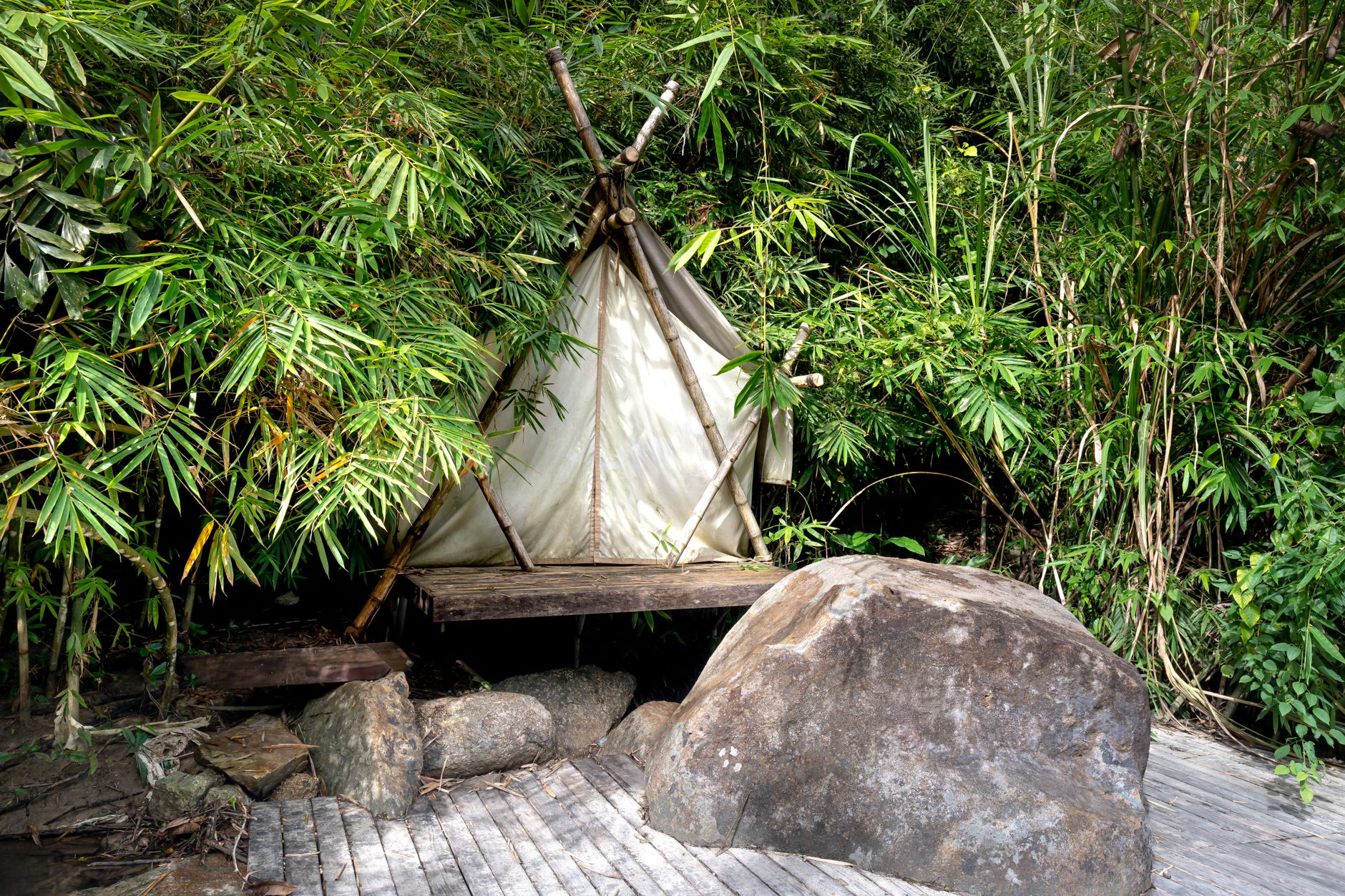
What a tented camp means here, and what it costs
The Kenyan tented camp is not camping. At the top end it is a canvas-walled room on a raised timber deck with a proper bed, a flushing loo, a hot shower fed by a solar or wood-fired boiler and a veranda facing a waterhole. At the bottom end it is a dome tent on a mown pitch with shared ablutions. The price spread is enormous — KSh3,500 a night for a pitch on the Naivasha shore, KSh12,000 to KSh25,000 for a comfortable mid-range tent with meals, KSh35,000 to KSh80,000 full board for the small luxury camps inside or beside a national park.
The second variable is what full board means. Camps deep in a park usually include all meals, because there is nowhere else to eat; camps on the Naivasha and Machakos fringes often price bed and breakfast and sell dinner at KSh2,500 to KSh4,500. Park entry is separate and significant — Nairobi National Park charges non-resident day fees, and Lake Nakuru is higher again. Budget for fees, drinks and conservancy levies on top of the tent rate, or the final bill lands 40 percent above what you thought you booked.
1. Inside Nairobi National Park: the one that sounds impossible
There is a genuine bush camp inside the park boundary, reached through the gate off Magadi Road on the western side, roughly 45 minutes from the city centre and utterly invisible from it. You sleep in canvas under yellow-barked acacias with lion and hyena audible at night, and you wake up already inside a 117 square kilometre park rather than queueing at a gate at 6am. Rates sit at the top of the market, in the KSh45,000 to KSh70,000 per tent full-board range, plus park fees. It is expensive and it is worth it once.
The honest catches: no fence, so you are escorted to your tent after dark and you do not wander; solar power with limited charging capacity and no air conditioning; and a genuine chill from June to August, when night temperatures at 1,600 to 1,800m fall to 10 to 12 degrees. Hot water bottles are put in the beds, which tells you everything. Book it for one or two nights at the start or end of a longer trip, not as a base for city sightseeing — the drive back through the western gate to town is not something you want to do twice a day.
2. The park-edge camps at Athi River and Kitengela
South-east of the city, where the park's unfenced boundary opens onto the Athi-Kapiti plains, a cluster of camps and tented cottages sit on private land within sight of migrating zebra and wildebeest in the dry months. Drive time is 40 to 60 minutes from the CBD via Mombasa Road or the Southern Bypass, and prices are far friendlier than inside the park — KSh10,000 to KSh22,000 for a comfortable tent, often bed and breakfast. This is the best value wildlife-adjacent canvas near Nairobi and my pick for a first-time weekend.
You get plains views, big skies and quiet, and you can be at the park's main Langata gate in 30 to 45 minutes for a dawn drive. What you do not get is guaranteed game outside the fence — the plains empty out during the rains when the animals disperse, and quarry and industrial development along the Athi corridor has eaten into the corridor over the last decade. Ask what has been seen in the last week rather than what the website promises. Skip anything advertised as being on the bypass itself; road noise carries a long way over open ground.
3. Machakos hills and Kanzalu: the cheap escape
Ninety minutes east on Mombasa Road, the hills around Machakos town and the Kanzalu ridge hold a scatter of small tented camps and eco-lodges at KSh5,000 to KSh12,000 a night. There is no big game, which is exactly the point — this is walking, granite outcrops, wide views back toward Kilimanjaro on a clear morning, and a resident population of baboons, hyrax and raptors. Meals are simple and cheap, often KSh900 to KSh1,800 for a plate of nyama choma and ugali at the camp or in town.
It is drier and warmer than the Nairobi highlands, sitting lower and further east, so nights are pleasant even in July when the city is grey and cold. Weekends bring Nairobi families and church groups, so a Friday night can be loud until midnight; midweek the same camp is empty and you will have the ridge to yourself. Book Machakos if you want two nights of quiet for under KSh25,000 all in. Skip it if you have come to Kenya for wildlife, because you will spend the weekend looking at very good views and no animals.
4. Lake Naivasha: canvas on the shoreline
Ninety kilometres north-west, 90 minutes to two hours depending on the escarpment traffic, the South Lake Road shore is lined with camps of every grade — from KSh3,500 pitches with shared showers and a bar, up to KSh20,000 to KSh35,000 tented rooms with lake frontage and boat jetties. Hippos come out to graze on the lawns after dark, which is not a marketing line but a security procedure: camps post askaris and expect you to be inside by 9pm. Fever trees, fish eagles and 400-plus bird species make this the best birding base near the capital.
The complication is water level. Naivasha rose dramatically from 2020 onward and drowned lawns, jetties and in some cases whole buildings along the shore, so a camp advertised as lakefront may be either newly waterfront or standing behind 200 metres of dead trees. Ask for a photograph taken this month. Boat trips to Crescent Island run about KSh4,000 to KSh6,000 per boat plus a landing fee, and Hell's Gate is 20 minutes away with cycling among zebra. Book Naivasha for two nights; one is too short given the drive.
5. Kajiado, Magadi and the southern road
Head south-west on the Magadi Road through Kajiado county and the country changes fast: acacia scrub, Maasai bomas, escarpments dropping toward Lake Magadi at 600m, and a temperature 10 degrees higher than Nairobi. Small tented camps and community-run conservancy camps sit off this road at KSh8,000 to KSh25,000, some with Maasai guides for walking safaris. Drive time is 90 minutes to Kajiado town, three hours to Magadi itself on a road that is tarmac in parts and rough in others.
This is the most atmospheric option on the list and the least predictable. Water can be trucked in, power is solar, mobile signal drops out in the valleys, and in the dry season from January to March the heat at Magadi is genuinely punishing at 35 degrees and up. Come in June or July, or after the November rains have greened the plains. Book here if you want Maasai-guided walking and near-total silence; skip it if you need reliable connectivity or you are travelling with small children who will not enjoy three hours of corrugation.
6. Going further: Nanyuki, Nyeri and the Rift lakes
Nanyuki is 200km and three to three and a half hours north on the A2, and the conservancy camps around Ol Pejeta and the Mount Kenya foothills are a different tier — big game including rhino, Mount Kenya filling the skyline on a clear morning, and prices from KSh20,000 up to well past KSh100,000 for the flagship camps. Nyeri and the Aberdares are 150km and about two and a half hours, wetter, greener and colder, with forest camps at 2,000m where a fire in the evening is not decorative.
Nakuru is 160km, roughly two and a half hours, and its lakeside lodges sit inside a national park with flamingo numbers that fluctuate wildly with water chemistry — do not book on the promise of a pink lake. All three are better as three-night trips than weekend dashes. If you have only two nights, stay inside the 100km ring: Naivasha, Athi River or the park itself. If you have four, drive to Nanyuki and make the tent the point of the trip rather than a stopover.
The verdict, and what to pack
Ranked for a first visit: the camp inside Nairobi National Park for one unforgettable night at KSh45,000 to KSh70,000; the Athi River and Kitengela park-edge camps at KSh10,000 to KSh22,000 as the best-value weekend; Naivasha's shoreline camps for birds, boats and Hell's Gate; the Kajiado conservancy camps for Maasai-guided walking; Machakos for a cheap, quiet two nights; and Nanyuki only if you have four days. Skip anything within earshot of the Southern Bypass, and skip Nakuru if flamingos are your only reason for going.
Pack for cold, which surprises people. Nairobi sits at 1,795m and the surrounding camps at 1,600 to 2,200m, and from June to August nights fall to 10 degrees with damp canvas making it feel colder. Bring a fleece and long trousers for the evening even in January. Add a torch, because paths between tent and mess are unlit by design, and insect repellent — malaria risk in Nairobi itself is negligible at this altitude but rises in the lower, hotter Rift and Athi areas. Finally, carry cash: many camps have no card machine and mobile money coverage drops out in the valleys.
Questions, answered
How cold does it get in a tent near Nairobi?
Colder than visitors expect. At 1,600 to 2,200m, June to August nights fall to 10 to 12 degrees and canvas holds the chill. Good camps supply hot water bottles and heavy blankets. Even in the warm January to March window, evenings on a veranda need a fleece after about 7pm.
Are tented camps safe with wildlife around?
Yes, with the standard rules. Unfenced camps escort guests to tents after dark, keep food out of tents and post night watchmen. In Naivasha the specific risk is hippos grazing on lawns after sunset — stay inside after about 9pm and never walk between the tent and the lake without an askari.
How much should I budget beyond the tent rate?
Add park or conservancy entry fees, which are charged per person per day and are significant at Nairobi National Park and Lake Nakuru, plus drinks and any meals not included. A realistic all-in weekend for two at a mid-range park-edge camp lands around KSh50,000 to KSh70,000 including fees, fuel and dinners.
Which camp is best if I only have one free night?
The park-edge camps at Athi River and Kitengela, 40 to 60 minutes from the CBD at KSh10,000 to KSh22,000. You get plains, stars and quiet without losing half a day to driving, and you can still be at the Nairobi National Park Langata gate for a 6.30am game drive the next morning.
Doing good is the business: every booking through Stay Nairobi funds one verified tonne of carbon removal — same room, same price, no markup.
Start your search