
Transport
Is it safe to walk in Nairobi? Where, when and how
Yes, in daylight, in the right five or six areas, with your phone out of sight — and no, essentially nowhere after 6.45pm, when the equator switches the lights off within 20 minutes.
The honest headline
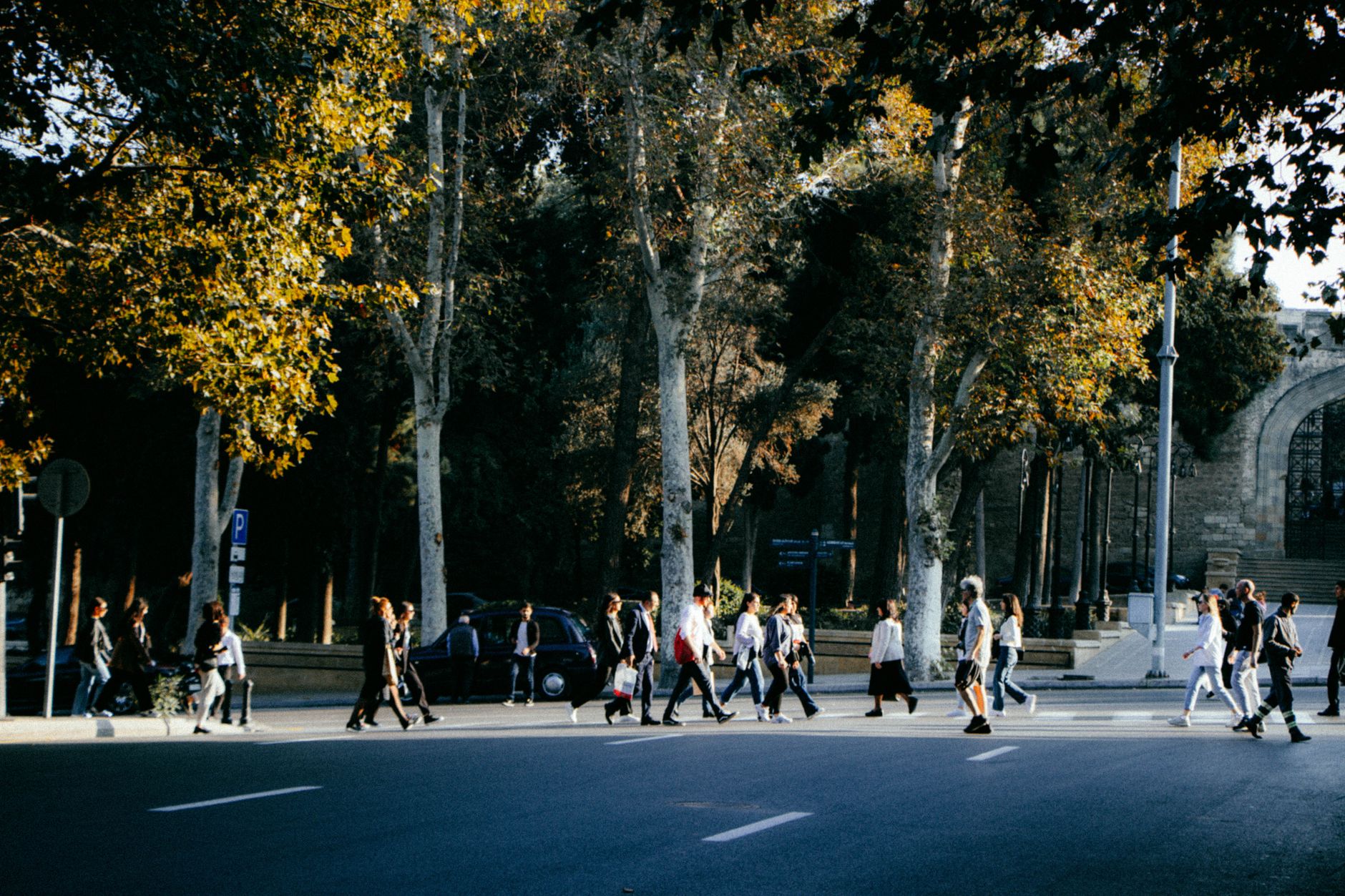
Nairobi is walkable in defined pockets during defined hours, and it is not a city you stroll aimlessly at night. Daylight walking in Westlands, Kilimani, Gigiri, Parklands, Lavington and the core CBD grid is done by thousands of residents every day, and visitors who behave like locals — phone away, bag closed, purposeful pace — rarely have problems. The risks are opportunistic property crime, chiefly phone snatching, not violence directed at foreigners. Karen, by contrast, has almost no pavements and is not a walking suburb at all, whatever its leafiness suggests on a map.
The night rule is absolute and it surprises people. Nairobi sits on the equator, so sunset lands between 6.30pm and 6.55pm all year and full dark follows in 20 minutes; there is no long European dusk to walk home in. Street lighting is patchy outside the main avenues, pavements end abruptly into open storm drains, and pedestrians become invisible to traffic. From dusk, take a car, even for 400 metres. A KSh300 ride-hail hop between two Westlands restaurants is the single best-value safety purchase in this city and every resident makes it without embarrassment.
The three habits that do most of the work
First, the phone stays in a front pocket or an inside bag pocket, not in your hand. Snatches from pedestrians and from open car windows in stationary traffic are the defining Nairobi street crime, and a large bright handset held at chest height is the advert. If you need directions, step into a shop, a café or a petrol station forecourt to look. Second, carry a splittable amount: KSh3,000-5,000 in notes, one card, a photocopy or phone photo of your passport, and leave the passport itself in the hotel safe unless you need it for a SIM registration or bank visit.
Third, walk like you know where you are going. Standing still on a pavement with an unfolded map, a camera on a neck strap and a rucksack hanging open marks you out far more than skin colour does. Nairobi's pedestrian culture is brisk and purposeful; match it. Cross where everyone else crosses, use the footbridges on Waiyaki Way and Uhuru Highway rather than sprinting lanes, and accept that vehicles will not stop for you at zebra crossings. These three habits, applied consistently, reduce your exposure more than any amount of area-by-area anxiety.
Area by area: where walking works
Westlands is the most walkable base for a visitor. Woodvale Grove, Muthithi Road, Ring Road Westlands and the streets around Sarit and Westgate have proper pavements, constant foot traffic and shops open into the evening, and you can cover restaurants, malls and cafés on foot from 7am to about 6.30pm. Kilimani is similar but patchier: Lenana Road, Kindaruma Road and the residential grid off Argwings Kodhek are fine by day, though pavements vanish in places and construction hoardings push you into the road. Parklands, especially around 3rd Avenue and the Diamond Plaza area, is busy, commercial and comfortable in daylight.
Gigiri is the calmest, thanks to the UN complex and diplomatic security presence along Limuru Road and UN Avenue — pleasant walking, but there is little to walk to beyond Village Market. Lavington is quiet and green with almost no pedestrians, which cuts both ways: low crowding, low natural surveillance. The central business district works on the main axes — Kenyatta Avenue, Koinange Street, Standard Street, Kimathi Street, Muindi Mbingu Street — between roughly 8am and 5pm, when it is crowded with office workers. Karen and Runda are car suburbs; walking a kilometre on Karen Road means walking on the tarmac itself.
Where not to walk, and when
The downtown streets east of Moi Avenue — River Road, Latema Road, Accra Road, Ronald Ngala and the matatu warrens around them — are dense, chaotic and pickpocket-heavy even at midday, and genuinely unwise after dark. The Globe Cinema roundabout area and the pedestrian underpasses off Uhuru Highway should be skipped at night. Long stretches of Uhuru Highway itself have pavements with no shops and no witnesses, and are not places to walk at any hour. Paths along the Nairobi River and through unlit sections of open ground are locally understood as risky and no local would take that shortcut.
Uhuru Park and Central Park, refurbished and reopened with fresh landscaping and lighting, are pleasant in daytime and popular with families at weekends; they are not places to be after sunset. The same applies to the grounds outside the Railway Museum and the quiet lanes behind the CBD on a Sunday, when offices close and the streets empty. Empty is the signal to watch for. Nairobi risk correlates with the absence of other pedestrians far more than with any particular postcode, which is why a busy Parklands street at 7pm feels different from a deserted Lavington one at the same hour.
The walks that are genuinely worth doing
Karura Forest is the best walking in the city: over 50km of tracks in a fenced, ranger-patrolled 1,000-hectare forest with gates on Limuru Road, Kiambu Road and Thigiri, a waterfall, caves and a decent café. Non-resident entry runs around KSh600 and it is safe to walk alone on the main trails in daylight. The Nairobi Arboretum off State House Road is smaller, cheaper and full of joggers and church groups on Sunday mornings. Oloolua Nature Trail in Karen gives you river gorge and forest for a similar modest fee, and is the one place in Karen where you actually walk.
In the city, the best urban stretch is the CBD architecture loop: the National Archives at Moi Avenue, Kenyatta Avenue's mid-century blocks, the Nairobi Gallery at Point Zero, the City Market on Muindi Mbingu Street, and up towards the National Museum on Museum Hill. That is 45-60 minutes of walking, best done between 9am and 3pm on a weekday, and it is far more interesting than another mall. Take a guided version if you would rather not think about it — reputable walking tours run from the CBD and their guides know exactly which street to turn down and which to skip.
The hustles you will meet on foot
The most common is the sympathetic stranger: someone who falls into step, claims to be a student, a refugee or a fellow traveller in trouble, and steers the conversation towards money or towards a quieter street. Disengage early and politely, keep walking, do not follow anyone anywhere. A second variant is the plainclothes officer who demands to see your passport and inspect your cash — real officers are uniformed, and you are entitled to say you will accompany them to the nearest police station rather than hand over anything on the pavement. Naming a station usually ends the conversation.
Around museum and market entrances you will meet unofficial guides who attach themselves and then demand a fee. Fix the terms in the first ten seconds — either agree a price and use them properly, or say no once and firmly. At the Maasai markets, expect opening prices three or four times what things sell for; that is haggling theatre, not a scam. Genuine warmth is also abundant and constant, which is the confusing part: most people who greet you on a Nairobi street want nothing at all. The filter is simple — anyone who steers you off your route is a problem.
When to stop walking and take a car
Take the car when it rains, when you are carrying anything valuable, after dusk, when your route crosses a major highway without a footbridge, and whenever the pavement runs out and you would be sharing the tarmac with matatus. Ride-hail apps — Uber, Bolt, Little and inDrive all operate here — make this cheap enough that it is not a real decision: KSh300-600 covers most trips inside Westlands or Kilimani, and KSh900-1,500 gets you across town off-peak. Order from inside a building, not from the kerb with your phone up.
Boda bodas will offer themselves constantly and they are the fast option in traffic, but the injury statistics from Nairobi's hospitals are grim and helmets are often absent or unusable. If you take one, keep it to short daylight hops, insist on a helmet, and skip them entirely in rain. For evening restaurant plans, the smoothest pattern is to have your driver, or the restaurant, arrange the return leg — most Westlands and Kilimani restaurants will call a car for you, and a doorman-supervised pickup at 10.30pm is a better arrangement than standing on Woodvale Grove with an app open.
What actually happens to visitors, in proportion
The realistic worst case for a careful daytime walker is a snatched phone, and the realistic likelihood over a week of sensible behaviour is low. Violent crime against tourists in the areas listed here is uncommon; the incidents that reach travellers' ears usually involve walking at night, unlicensed taxis, or leaving a bar alone at 2am. Nairobi's reputation was formed decades ago and has outlived the reality of Westlands and Gigiri today, but it has not outlived the reality of River Road at 11pm. Calibrate to the specific street and the specific hour, not to the city name.
Practical insurance: keep a note of your hotel's exact name and street, because taxi drivers navigate by landmark and estate, not by postcode. Save an emergency contact and the number of your embassy. Register nothing valuable to a coat pocket. And ask your hotel's front desk each morning about anything unusual — a planned demonstration on Uhuru Highway, a road closure, a match at Nyayo Stadium. Nairobi telegraphs its bad afternoons in advance, and the people at the front desk always know before the news does.
Questions, answered
Can I walk from Westlands to the city centre?
It is about 4km along Waiyaki Way and Uhuru Highway, and locals do it, but long stretches have poor pavements, heavy exhaust and few shops. Do it once for the experience in the morning if you must; otherwise take a car for KSh400-700. The return leg after dark is a firm no.
Is it safe to walk alone as a woman during the day?
In Westlands, Gigiri, Parklands, Kilimani and the CBD core, yes, in daylight, and plenty of women do it daily. Expect verbal attention from some street traders and boda riders; a brief firm response ends it. Avoid deserted streets, do not walk after dusk, and use restaurant-arranged cars in the evening.
What should I do if someone demands money on the street?
Keep walking and keep talking normally; do not stop, do not open your bag, do not go anywhere with them. If they persist, step into the nearest shop, hotel lobby or petrol station — every one of them has a guard. Hand over a phone rather than resist if it ever escalates.
Are the parks safe to walk in?
Karura Forest and the Arboretum are ranger-patrolled, popular and fine in daylight, with Karura charging non-residents around KSh600. Uhuru Park and Central Park are enjoyable by day, busiest at weekends, and off-limits after sunset. Nowhere green in Nairobi should be walked once the light goes at about 6.45pm.
Doing good is the business: every booking through Stay Nairobi funds one verified tonne of carbon removal — same room, same price, no markup.
Start your search