
The drive and whether to do it in a day
Nakuru is 160 kilometres from Nairobi on the A104, past Naivasha and Gilgil, and takes two and a half to three hours each way in a private car. That means a genuine 5.30am departure and a 7pm return, with roughly six hours on the ground. It is doable and thousands of people do it, but be honest about the maths: the park deserves four hours and the drive is not scenic once you are past the escarpment. If you can spare a night, sleeping in Nakuru turns a rush into a good trip.
By matatu, Nakuru costs KSh500 to KSh800 from the Nairobi CBD and takes three to three and a half hours; scheduled coaches on the Kisumu and Kericho routes are more comfortable for similar money. Neither drops you inside the park, and Lake Nakuru National Park does not allow walking, so you must arrange a vehicle in Nakuru town — a half-day game drive in a local van runs KSh8,000 to KSh15,000 for the vehicle. Booking that in advance is the difference between a game drive and a wasted morning at the Main Gate.
Lake Nakuru National Park
Lake Nakuru National Park is 188 square kilometres of soda lake, yellow-barked fever tree forest and euphorbia-covered cliffs, fenced and heavily protected. Non-resident adult entry is about KSh7,800, paid by card at the Main Gate off the Nakuru–Nairobi road, with roughly KSh300 for a small vehicle; the park opens at 6am and closes at 6pm. It is one of the best places in Kenya to see both black and white rhino, and Rothschild's giraffe were translocated here decades ago, so a three-hour circuit usually produces all three plus buffalo, waterbuck and warthog.
Drive the lakeshore loop from the Main Gate north past the sewage works birding area, then climb to Baboon Cliff for the classic overview of the lake with pelicans strung along the shoreline. Out of Africa viewpoint and Lion Hill give the other angles. In the south, Makalia Falls is a 20-minute stop worth making after rain. Lions are present and often up in the acacias near Lion Hill; leopard sightings happen in the euphorbia forest at dawn. Keep your windows up around baboons at the picnic sites, which are relentless.
About those flamingos
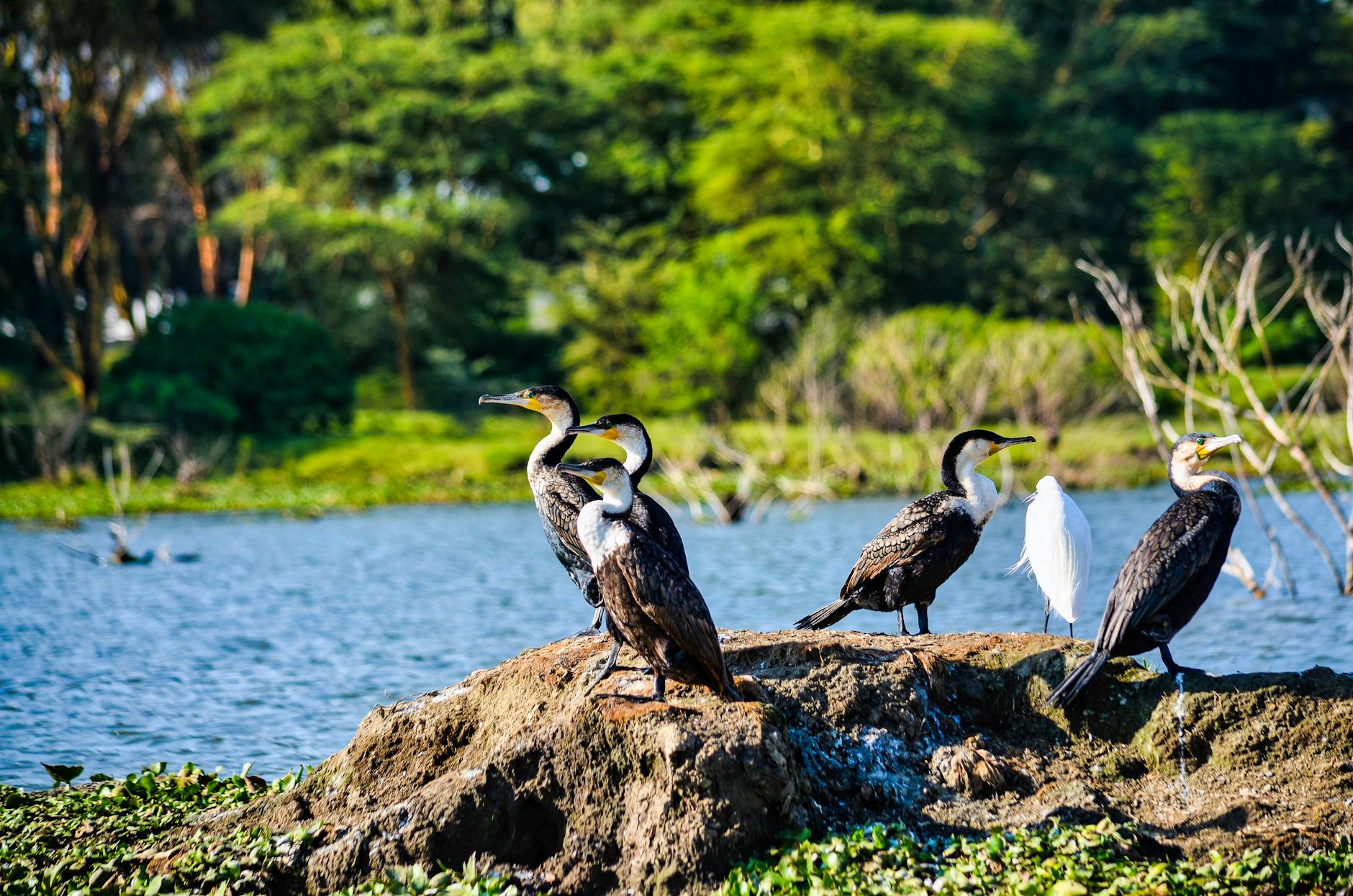
Lake Nakuru built its fame on a million lesser flamingos turning the water pink, and that is no longer a reliable promise. Heavy rains from 2010 onward raised the lake level, diluted the alkalinity and killed the algae the flamingos eat, so the big flocks have shifted to Lake Bogoria and Lake Elmenteita. You will normally still see hundreds to a few thousand birds along the southern shore, plus great white pelicans in numbers, and the rising water drowned lakeside acacias into a photogenic dead forest.
If flamingos are the trip, ask your driver about Lake Elmenteita, 30 kilometres back toward Naivasha, which sits outside the park system and can be viewed from the Delamere-area viewpoints on the A104 for nothing. Lake Bogoria, with its geysers and dense flamingo flocks, is a further 100 kilometres north of Nakuru and not a Nairobi day trip. Treat Nakuru as a rhino park with good birdlife and you will not be disappointed by what the lake looks like on the day.
Nakuru beyond the park
Nakuru is Kenya's fourth-largest city and has more than the lake. Menengai Crater, seven kilometres north of the centre, is one of the largest calderas in the world at 12 kilometres across; the viewpoint at the rim charges a small fee of a few hundred shillings and looks down 480 metres onto steam vents. Hyrax Hill Prehistoric Site, on the Nairobi road just outside town, is a small archaeological museum for about KSh600 with excavated Neolithic settlement remains and a rock gong.
Twenty-three kilometres southwest, near Njoro, Lord Egerton Castle is a 52-room 1930s folly built by Maurice Egerton for a fiancée who never moved in, open to visitors for around KSh600 and eccentric enough to justify the detour. In town, eat at one of the choma houses along Kenyatta Avenue — goat by the kilo at KSh900 to KSh1,200 — or the long-running Tipsy Restaurant on Gusii Road for curries and fish around KSh700. Nakuru town also has the cheapest fresh produce market in the Rift Valley.
Where to sleep if you stay the night
Staying over makes the fees work harder because a park ticket runs to the following morning's exit and you can do a 6am drive. Inside the park, Lake Nakuru Lodge and Sarova Lion Hill sit on the eastern ridge with lake views at roughly KSh18,000 to KSh30,000 double, full board or half board, and Flamingo Hill Camp offers tented rooms around KSh25,000. Waking up inside the fence and driving at first light is the single biggest upgrade on a Nakuru trip.
In town, business hotels are much cheaper: Sarova Woodlands on the George Morara road runs about KSh12,000, Merica Hotel on Kenyatta Avenue near KSh9,000, and clean mid-range guesthouses around KSh4,000 to KSh6,000. Sleeping in town costs you the dawn drive but buys you Menengai Crater at sunrise and Nakuru's markets and street food. Either way, book ahead for weekends and school holidays, when the park fills with Kenyan family trips and rooms inside the gate sell out first.
Costs, seasons and the practical plan
A day trip by private car for two people costs roughly KSh35,000 to KSh45,000 all in: KSh15,000 to KSh20,000 for the car and driver, about KSh15,600 for two non-resident park entries, KSh300 vehicle fee and lunch. By matatu with a shared game-drive vehicle arranged locally, budget KSh14,000 to KSh18,000 per person. Park fees are card-only at the gate, so do not arrive with just cash and expect it to work.
The dry seasons, January to March and July to October, give firm roads and animals concentrated near water. The long rains from late March into May make the southern tracks around Makalia Falls heavy going and a four-wheel drive necessary, but the fever-tree forest is at its greenest and birding is superb. Go on a weekday if you can, leave Nairobi by 5.30am, take a packed breakfast, and treat the Main Gate opening at 6am as your target rather than a nice idea.
Questions, answered
Is Lake Nakuru worth a day trip from Nairobi?
Yes if you want rhinos, since Nakuru is one of the most reliable places in Kenya to see both black and white rhino, plus Rothschild's giraffe and lion. The catch is six hours of driving for about four hours in the park. Non-resident entry is around KSh7,800 per adult. If your schedule allows one night in Nakuru, the trip improves dramatically.
How much is entry to Lake Nakuru National Park?
Non-resident adults pay about KSh7,800 for a day, with children at roughly half and a vehicle fee near KSh300 for a small car. Payment at the Main Gate is by card, not cash. The ticket covers 24 hours from entry, which is why an overnight inside the park effectively gives you two game drives on one fee.
Are there still flamingos at Lake Nakuru?
There are flamingos, but not the million-strong flocks of the 1990s. Rising water levels since 2010 diluted the lake and pushed most lesser flamingos to Bogoria and Elmenteita. Expect hundreds to a few thousand birds along the southern shore plus large numbers of pelicans. For big flamingo flocks, look at Lake Bogoria, which is too far north for a Nairobi day trip.
Can I visit Lake Nakuru without a car?
You can get to Nakuru town by matatu for KSh500 to KSh800 or by scheduled coach, but the park bans walking, so you must hire a vehicle. A half-day game drive in a local van costs KSh8,000 to KSh15,000 for the vehicle, best arranged in advance through your accommodation rather than at the gate. Budget KSh14,000 to KSh18,000 per person for the whole day.
What else is there to do in Nakuru?
Menengai Crater, a 12-kilometre-wide caldera seven kilometres north of town, with a rim viewpoint for a few hundred shillings. Hyrax Hill Prehistoric Site on the Nairobi road, about KSh600, for Neolithic excavations. Lord Egerton Castle near Njoro, also around KSh600, a 52-room 1930s folly. In town, the Kenyatta Avenue choma houses sell goat at KSh900 to KSh1,200 a kilo.
What is the best time of year to visit Lake Nakuru?
July to October and January to March are the dry windows, with firm roads and game concentrated near water. The long rains from late March to May make southern tracks near Makalia Falls difficult without four-wheel drive, though the forest is green and birding peaks. Weekdays are quieter than weekends, when Kenyan family trips fill the park and the in-park lodges.
Doing good is the business: every booking through Stay Nairobi funds one verified tonne of carbon removal — same room, same price, no markup.
Start your search