
The short answer: July to October, or January to February
Nairobi's two dry seasons are the reliable windows. July to early October is the long dry: cool, often overcast mornings around 11C, afternoons of 21C to 23C, and very little rain. It coincides with the Maasai Mara wildebeest crossing season, so the city is full of safari traffic and hotel rates in Westlands and Karen climb 20 to 30 per cent. January and February are the other sweet spot — warmer, 26C afternoons, bright clear skies, and the best light for photography anywhere in the city.
The rains split into two. The long rains fall roughly mid-March to late May, typically as heavy afternoon downpours rather than all-day drizzle, and they turn unpaved Kilimani and Lavington side lanes to mud and add 30 to 45 minutes to any cross-town journey. The short rains run late October to early December, milder and more forgiving. Neither season makes Nairobi unvisitable — mornings are usually dry — but April and May are the months when nothing runs to schedule and you should build slack into every plan.
Month by month, what it actually feels like
January and February: hot by Nairobi standards, dusty, dry. Afternoons hit 26C to 28C, nights drop to 13C. Nairobi National Park game viewing is excellent because animals concentrate near water. March starts humid and breaks into rain by mid-month. April is the wettest month, around 200mm, and the one to avoid if you have a tight itinerary. May tails off. June is transitional — grey, cool, with a chill that surprises people who packed for the equator; you will want a fleece for evenings on any Karen or Lavington garden terrace.
July and August are the coolest months, with morning temperatures around 10C to 12C and a persistent low cloud locals call the cold season. Afternoons still reach 21C. September and October warm gradually and stay dry — arguably the single best stretch. Late October brings the short rains, which peak in November at around 150mm but usually clear by late afternoon. December is warm, dry by mid-month, and busy with the domestic holiday crowd heading to the coast, which actually empties Nairobi hotels somewhat.
Jacaranda and Nandi flame: the flowering calendar
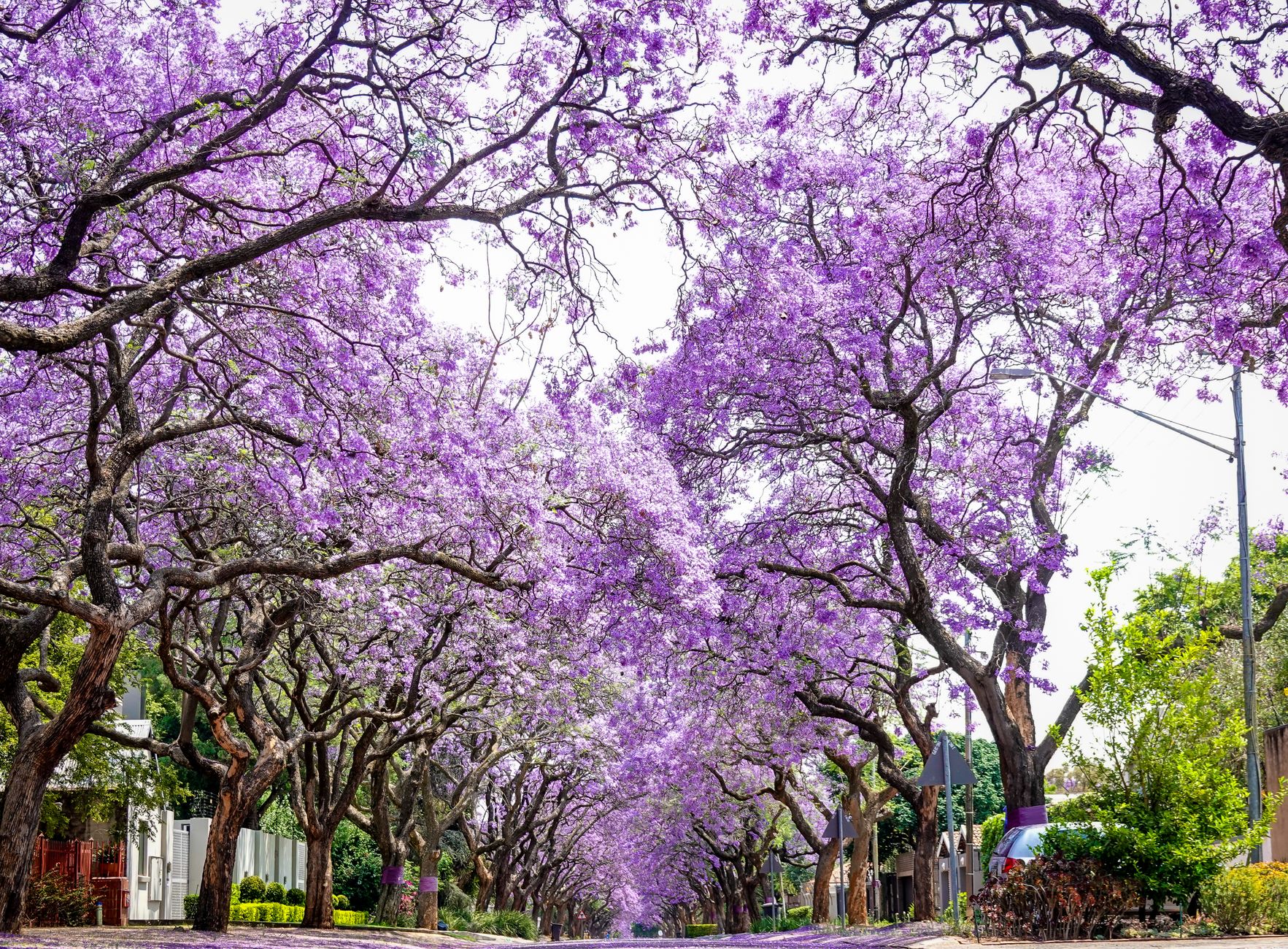
Nairobi's most photographed weeks are late September through October, when jacaranda trees drop purple across Kilimani, Lavington and the University of Nairobi grounds. City Hall Way, State House Road and the stretches of Riverside Drive and Kirichwa Road are thick with them, and after a light rain the pavement itself turns purple. It is the single strongest visual argument for the September-October window, and it overlaps neatly with the tail of the dry season.
A second bloom follows in November and December when Nandi flame trees go red across Parklands and along Limuru Road toward Gigiri. Karura Forest is at its greenest immediately after the short rains, with the waterfall near the Limuru Road gate actually running rather than trickling. If your visit is about photography rather than wildlife, late October through early December gives you flowering trees, green forest and afternoon storm light, at rates 15 to 20 per cent below the July-to-September safari peak.
How the season moves hotel prices
Nairobi is not a beach town, so its high season is driven by safari transit and conferences rather than weather. July, August and September carry the highest rates: a Westlands apartment that lists at KSh6,500 in May will ask KSh8,500 in August, and Karen lodges close to the Giraffe Centre push toward KSh20,000. December mid-month through early January is a second spike, driven by returning diaspora and holiday travel, though it eases once the coast pulls people away.
The genuine bargains sit in April, May and early June. Kilimani one-bedrooms drop to KSh4,500, Upper Hill business hotels discount hard because corporate travel thins, and you can negotiate weekly rates aggressively. You will get wet, and you should assume every drive takes half again as long, but the city is emptier and museums, markets and restaurants operate normally. If you are here to work, eat and see the city rather than to chase wildlife, the wet-season discount is real money.
Events worth timing a trip around
The Safari Sevens rugby tournament, historically staged at the Nyayo National Stadium and RFUEA Ground on Ngong Road, is one of the loudest weekends in the Nairobi calendar. The Nairobi International Trade Fair runs at the Jamhuri Park showground on Ngong Road each late September or early October and fills mid-range hotels across Kilimani and Lang’ata — check before booking that week. Madaraka Day on 1 June and Jamhuri Day on 12 December bring parades, road closures around State House Road and Uhuru Highway, and a genuinely festive city.
On a smaller scale, the Maasai market rotates by day of the week across the city — Tuesdays at Kijabe Street near the Globe roundabout, Thursdays and Saturdays at Village Market in Gigiri, Fridays at the Village Market and Sundays near Yaya Centre in Kilimani. It runs year-round regardless of season. Nairobi's live music scene peaks in the dry months when outdoor venues in Westlands and along Ngong Road can use their gardens; expect covers of KSh500 to KSh1,500 for a decent Friday lineup.
What to pack for the altitude
The single most common mistake is packing for the equator and forgetting the 1,795m elevation. Nairobi nights drop to 11C to 13C year-round and July mornings can feel colder than that in the wind. Bring a proper layer — a fleece or light down — plus a light rain shell between March and May and again in November. Sun protection matters more than the temperature suggests: UV at this altitude near the equator is fierce even under cloud, and the July overcast burns people who assume grey means safe.
Footwear should handle both mud and dust. Karura Forest and Ngong Hills trails are gravel and clay, and even Kilimani pavements are broken enough that sandals get punished. Malaria risk in Nairobi city itself is negligible at this altitude, but any day trip toward Naivasha, Nakuru or the lowlands changes that calculation — check current advice. Finally, bring a universal adapter for the UK-style three-pin type G sockets, and expect 240V.
Questions, answered
What is the best month to visit Nairobi?
September edges it. The long dry season is still holding, the jacarandas begin flowering across Kilimani and Lavington, and daytime highs sit around 24C with clear skies. February is the warmest good month if you prefer heat, with 26C to 28C afternoons and excellent visibility in Nairobi National Park. Both avoid the April-May long rains.
Is Nairobi cold?
Colder than most people expect. At 1,795m the city runs 10C to 15C cooler than the Kenyan coast, and June through August mornings sit around 10C to 12C with heavy grey cloud. Afternoons still reach 21C to 23C, so you are layering up and down all day. Pack a fleece for evenings in any month.
How bad are the rains in Nairobi?
April is the wettest month at roughly 200mm, falling mostly as intense afternoon storms lasting one to two hours rather than continuous rain. Mornings are usually workable. The real impact is traffic — a downpour can double journey times on Waiyaki Way, Ngong Road and Mombasa Road — and flooded unpaved side streets in Kilimani and Lavington.
When are the jacarandas in bloom in Nairobi?
Late September through October is the peak, with purple canopies over Kilimani, Lavington, State House Road and the University of Nairobi grounds. A second, smaller flush sometimes appears after the short rains in December. Nandi flame trees follow in November and December, going red across Parklands and along Limuru Road.
When is Nairobi cheapest?
April, May and early June. Kilimani apartments drop to around KSh4,500 a night, Upper Hill business hotels discount because corporate travel slows, and weekly negotiation works. Rates peak in July, August and September when safari transit fills the city, adding 20 to 30 per cent, with a second spike from mid-December to early January.
Doing good is the business: every booking through Stay Nairobi funds one verified tonne of carbon removal — same room, same price, no markup.
Start your search