
Museums
Karen Blixen Museum
The 1912 farmhouse where the author of Out of Africa ran a failing coffee estate, kept with its furniture, coffee machinery and the Ngong Hills filling the western windows.
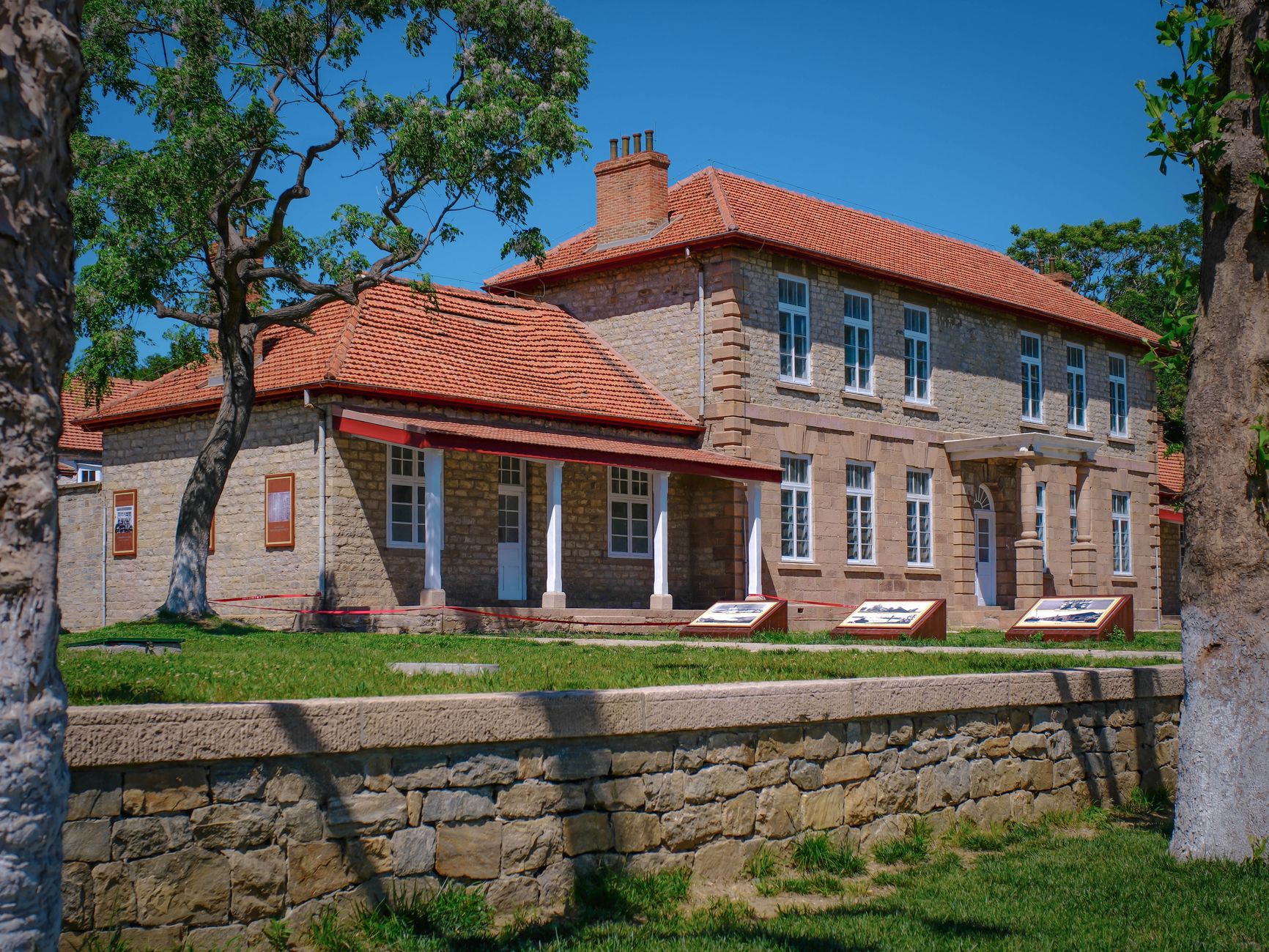
The Karen Blixen Museum is the farmhouse at the foot of the Ngong Hills where the Danish writer Karen Blixen lived from 1917 to 1931 while trying, and failing, to make a coffee estate pay. The house was built in 1912 by the Swedish engineer Ake Sjogren, bought by Blixen and her husband Bror von Blixen-Finecke, and became the setting of the memoir Out of Africa, published under the name Isak Dinesen in 1937. Denmark presented the house to the Kenyan government as an independence gift in 1964; it served other uses before National Museums of Kenya opened it as a museum in 1986, helped by the attention brought by Sydney Pollack's 1985 film. What survives is a modest, dignified stone bungalow set in fourteen acres of lawn and indigenous trees, furnished as a middle-class colonial farmhouse rather than a mansion.
The visit is a guided walk-through of about 40 minutes, included in the ticket, and the guides are the reason to come. You move from the verandah into the sitting room with its fireplace and the tall clock, past the dining room where Denys Finch Hatton dined, into Blixen's study with the writing desk and typewriter, then her bedroom and the bathroom with its zinc tub. Some pieces are hers, some came from the film set, and good guides tell you which is which. Behind the house the old coffee drying and grading machinery stands under a shed, along with the ox wagon and farm tools; the kitchen block is separate, as it was. Outside you walk the lawn to the western fence, where on a clear morning the four knuckles of the Ngong Hills sit exactly where the book puts them.
Plan an hour to ninety minutes. No booking is needed for individuals; you buy at the gate, wait a few minutes for the next guide to gather a group, and walk through. Photography inside the house is restricted, so ask first and expect to shoot the exterior, the machinery shed and the gardens instead. Read or reread the first chapter of Out of Africa before you come, because the house is small and the emotional weight is entirely in the story it carries. Skip the museum shop unless you want the postcards, and skip nothing else, since there is not much to skip. If you plan to combine this with the giraffe and elephant sanctuaries nearby, do the animal feeding times first and the house afterwards, when the tour groups have thinned.
Getting there needs a car, a taxi or patience. The museum is on Karen Road in Karen, about 12 km south-west of the CBD, which is 30 minutes off-peak and up to 75 in evening traffic. Matatu route 24 from the Railways terminus runs to Karen shopping centre; from the stage it is a 10-15 minute walk along Karen Road to the museum gate, and drivers will point you the right way if you say the museum by name. Fares from town are usually in the KSh80-150 band. Ride-hailing from the CBD generally lands between KSh900 and KSh1,500, from Westlands about the same, and from a Karen hotel or guesthouse KSh300-500. There is free parking inside the gate, and boda-boda riders wait outside for the hop to the giraffe centre.
Ticket prices follow the National Museums of Kenya tiers. Non-resident adults pay around KSh1,200 with non-resident children about KSh600; East African residents pay a middle rate and Kenyan citizens a low one, adults in the low hundreds of shillings and children less. The guided house tour is included, not an extra, which is unusually good value. What costs more is everything around the museum: coffee and cake at the Karen Blixen Coffee Garden next door, lunch at the restaurants along Karen Road, and craft shopping in the boutiques on the same stretch. Professional photography and filming need a permit arranged with National Museums of Kenya. Bring cash as a backup even though card payment is normally available, and check the price board at the window, since the tiers are revised from time to time.
Come at opening, 9:30, or after 16:00. The middle of the day, roughly 11:00 to 14:30, is when tour vans arrive from the city hotels and the small rooms feel crowded with four groups shuffling through in sequence. The house opens every day including public holidays, so there is no closed day. Seasonally, the clear dry months of January to early March and July to September give you the Ngong Hills from the lawn, which is the whole point of the western view; in the long rains of April and May the hills vanish into cloud for days and the lawn is soft underfoot. Late afternoon light on the stone facade is the best photograph of the day, and the garden birds are busiest in the last hour before closing.
It suits readers, and it suits anyone curious about how colonial Kenya actually lived rather than how films depict it. Wheelchair users can manage the verandah, the gardens and parts of the ground floor, but the house has thresholds and a step at the entrance and staff will need to help; call ahead if this matters. Families with small children find the house dull and the lawn excellent, so plan accordingly. Teenagers who have not read the book usually last twenty minutes. Anyone with a single free hour in Karen can do this well, since the tour is short and self-contained. Those who should skip it are visitors with no interest in the literature and no patience for period furniture; they will get more from the giraffe centre a few minutes away.
Karen makes an easy half-day. The Giraffe Centre is about 10 minutes by car; the Sheldrick elephant orphanage visiting hour is a similar distance on the other side of the Langata road; Bomas of Kenya is roughly 15 minutes east. Next door, the Karen Blixen Coffee Garden occupies another old farm building and serves lunch under the trees, a two-minute walk from the museum gate. The Utamaduni craft centre and the Kazuri bead workshop are both within a five-minute drive. If you are choosing where to base a Nairobi week, Karen is the quiet, leafy, expensive option: garden cottages and boutique lodges, honest prices for what you get, and every one of these sights inside a ten-minute radius rather than an hour of traffic.
The honest caveats. Visitors expecting the film set are disappointed: Pollack's crew built much of what looks familiar on screen elsewhere, and several interior pieces here are film props rather than Blixen's own, which good guides admit and lesser ones gloss over. The house is small and the tour brisk; if you arrive at noon you may feel processed. The famous view of the Ngong Hills depends entirely on the weather, and in the rains you will see grey. Finch Hatton's grave is not here but up in the Ngong Hills, on private land, and reaching it is a separate excursion needing permission. Finally, the KSh1,200 non-resident rate feels steep for 45 minutes if you do not care about the book, so be honest with yourself before you pay.
Hours & entry
Not free
Daily 9:30-18:00 · Public holidays 9:30-18:00 · Last guided tour about 17:30
What to see
{'what': "Blixen's writing desk and typewriter", 'where': 'Study, right of the main sitting room'}
{'what': 'Coffee drying and grading machinery', 'where': 'Open shed behind the farmhouse'}
{'what': 'Ngong Hills view across the lawn', 'where': 'Western fence line of the garden'}
Tips from the ground
Arrive at 9:30 or after 16:00 to dodge the hotel tour vans.
The guided house tour is included in the ticket, so wait for a guide rather than wandering.
Combine with the Giraffe Centre, 10 minutes away by car or boda.
Questions, answered
How much is entry to the Karen Blixen Museum?
Non-resident adults pay around KSh1,200 and non-resident children about KSh600. East African residents pay a middle tier on production of ID or a work permit, and Kenyan citizens pay a low rate, adults in the low hundreds of shillings. The 40-minute guided house tour is included in every ticket. Parking inside the gate is free. Professional photography needs a permit, and the neighbouring coffee garden and craft shops are separate costs. Confirm at the price board, as tiers change.
Are there free entry windows?
No. The museum charges every day it opens and there is no free hour, free day or resident free Sunday. The gardens sit inside the ticketed perimeter, so you cannot stroll the lawn without paying. National Museums of Kenya sometimes marks special occasions such as International Museum Day with reduced or waived entry at selected sites, but it is announced ad hoc and should never be counted on. Infants generally enter free; check at the gate.
How long does a visit take?
Between one and two hours. The guided tour of the house runs about 40 minutes, the machinery shed and ox wagon take ten, and the lawn, the tree walk and the Ngong Hills view add another twenty to thirty if the weather cooperates. Add the neighbouring coffee garden for lunch and you have filled a half-day. Visitors who have read Out of Africa tend to stay longest; those who have not are usually done in 45 minutes.
What days is the museum closed?
It does not close. Opening hours are 9:30 to 18:00 daily, public holidays included, with the last guided tour leaving around 17:30. Occasional private functions on the lawn can restrict garden access without notice, and heavy rain sometimes closes the outdoor machinery area. Arriving after 17:30 risks paying full price for a self-guided glance rather than the full tour, so aim to be at the ticket window by 17:00 at the latest.
Should I book ahead?
Individuals do not need to book. Buy at the gate and join the next guided group, which forms every few minutes when it is busy. Booking is worth it for groups of ten or more, school visits, weddings and photographic shoots, all handled by National Museums of Kenya. Tour operators bundling the museum with the Giraffe Centre and the elephant orphanage will handle timing for you, but doing it independently by taxi costs less and lets you dodge the midday crush.
What is the nearest stop or parking?
There is free parking inside the museum gate on Karen Road. By public transport, matatu route 24 runs from the Railways terminus in the CBD to Karen shopping centre for roughly KSh80-150, and the museum is a 10-15 minute walk from the stage along Karen Road. Ride-hailing from the city centre usually costs KSh900-1,500 depending on traffic, and KSh300-500 from anywhere in Karen itself. Boda-bodas wait outside the gate.
Doing good is the business: every booking through Stay Nairobi funds one verified tonne of carbon removal — same room, same price, no markup.
Start your search