
Museums
Nairobi Railway Museum
A yard of rusting steam locomotives and the carriage in which a man-eating lion killed a railway superintendent in 1900 — the Lunatic Line's own museum, five minutes from the station.
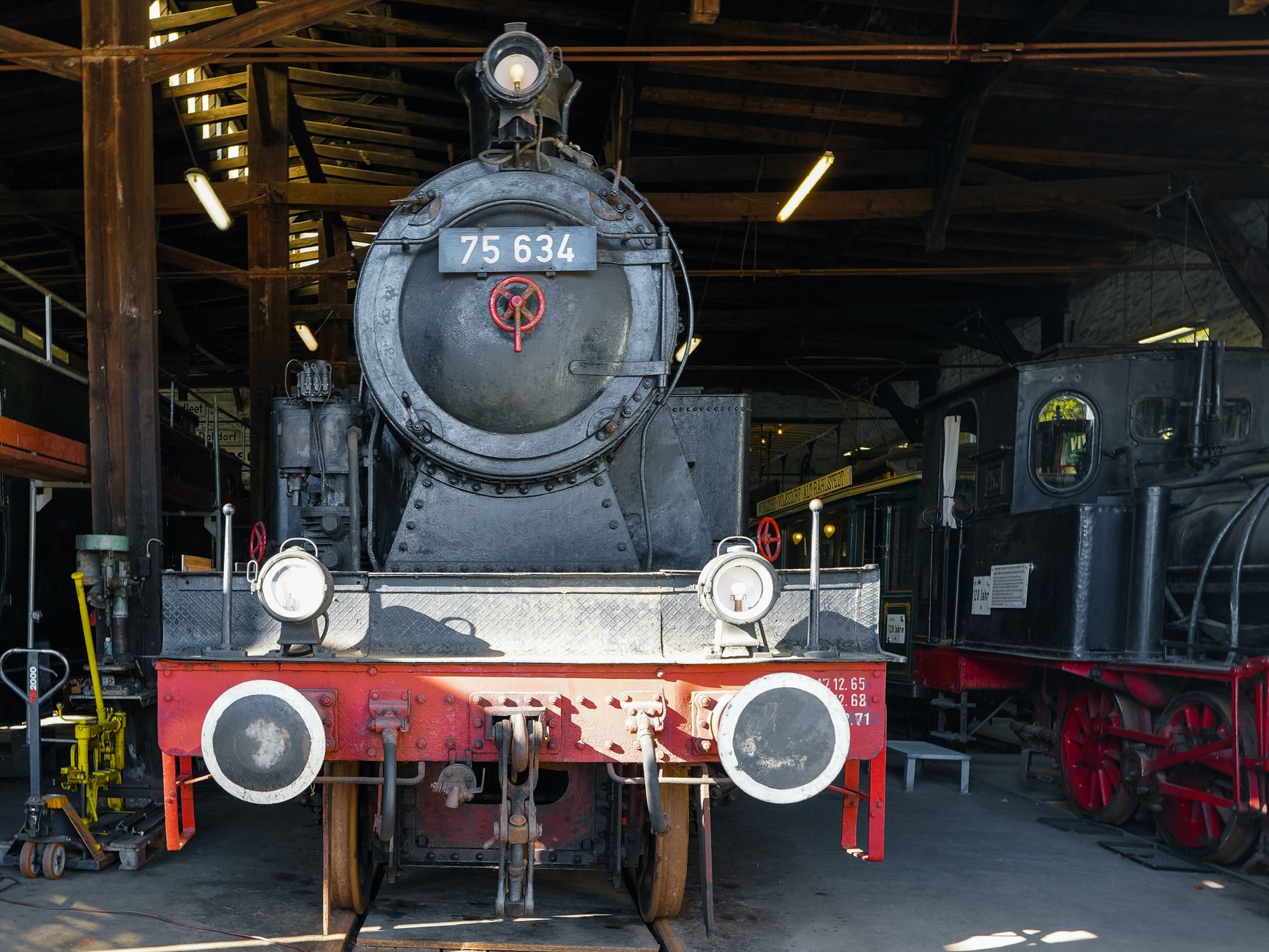
The Nairobi Railway Museum opened in 1971 beside the marshalling yards off Station Road to tell the story of the Uganda Railway, the line pushed inland from Mombasa from 1896 and mocked in the British press as the Lunatic Express. Nairobi exists because of it: the city began as a railhead depot on the swampy plain in 1899, which is why the museum sits where it does. The collection holds locomotives, coaches, signalling equipment, station clocks, dining car silver, engineering drawings, staff uniforms and thousands of photographs, plus the notorious inspection carriage from which Superintendent Charles Ryall was taken by a lion at Kima station in 1900. Outdoors, a yard of steam and diesel engines from the metre-gauge era stands in the open air, some restored, some frankly decaying, all climbable in a way no modern museum would allow.
The visit splits in two. The indoor gallery is a single long hall crowded with models, brass, tickets, tools and the Ryall carriage, and a staff guide will usually attach themselves to you and turn the objects into stories about the Tsavo lions, the Indian labourers who built the line and the engineers who surveyed the escarpment. Then you walk out into the yard, where a dozen locomotives stand on short lengths of track: Garratts, tank engines, a royal coach used by visiting British royalty, and rolling stock rusting quietly among the grass. You can climb into cabs, sit on footplates and photograph freely. Beyond the fence the modern Kenya Railways yards clank and shunt, which gives the place a working-railway soundtrack that the polished museums in town cannot match.
Plan 60-90 minutes and dress for a rail yard: closed shoes, something you do not mind getting oily, and sun protection because the yard has almost no shade. No booking is needed. Take the guide, tip them, and ask directly about the Ryall carriage and the Tsavo man-eaters, because that is the story the guides tell best. Skip nothing, but be realistic that the indoor labels are sparse and the pleasure of the outdoor yard is the pleasure of poking around. Families should be warned that the yard has trip hazards, sharp edges and open cab steps, so children need holding by the hand rather than let loose.
Getting there on foot is the point. The museum is on Station Road, just off Haile Selassie Avenue, an eight-minute walk west of the Nairobi Railway Station and about fifteen minutes from the Ambassadeur end of Moi Avenue. Follow Haile Selassie Avenue to the station approach and turn right before the tracks; ask for the museum by name if you lose the turning, as it is unsigned from a distance. Any matatu to the Railways terminus drops you a few hundred metres away for KSh50-120 from most suburbs. Ride-hailing from Westlands is usually KSh400-700 and from Karen KSh900-1,500. There is a small car park inside the gate, which is the only free parking worth having in this corner of the CBD, but the surrounding streets are chaotic at rush hour.
Tickets follow the standard national tiers. Non-resident adults pay in the region of KSh600 with non-resident children about half; East African residents pay a middle rate and Kenyan citizens a low one, adults typically in the low hundreds of shillings. The guide is not charged for but expects a tip of KSh200-500. There is no cafe, so bring water. Professional photography and film shoots, which the yard attracts regularly, require a permit arranged in advance with Kenya Railways or National Museums of Kenya. Occasional heritage steam excursions and railway events are ticketed separately and announced ahead. Prices are posted at the desk and have shifted upward over the years, so treat these figures as indicative and carry cash.
Mornings are best. Come between 8:15 and 11:00, when the yard is cool, the light is low across the locomotives and staff have time to talk. By early afternoon the metal is hot to touch and the open yard is unforgiving under the equatorial sun. The museum opens seven days a week including public holidays, so there is no closed day to work around, but staffing is thinner at weekends and you may go unguided. Dry months, January to March and July to October, make the yard walk pleasant; during the April-May long rains the tracks flood in patches and the grass between the engines gets deep and wet, though the indoor hall remains a decent rainy-hour option.
It suits railway enthusiasts absolutely, and it suits curious generalists more than they expect, because the story of the line is the story of Kenya. Photographers love it. Teenagers who like machinery do well; teenagers who do not will be finished in twenty minutes. Wheelchair users can enter the indoor gallery, but the outdoor yard is ballast, grass and uneven ground, and boarding any of the rolling stock is impossible, so roughly half the site is inaccessible. Anyone with an hour before a train from Nairobi Terminus or the old station can fit it in comfortably. Those who should skip it are visitors expecting restored, polished heritage stock; much of this yard is in honest decay.
Around it, the CBD unfolds. The Kenya National Archives is fifteen minutes' walk north-east on Moi Avenue, the August 7th Memorial Park is about the same, and the Kenyatta International Convention Centre rooftop is 15-18 minutes north for the aerial view of the very rail yards you just walked. City Market and the craft stalls are 20 minutes north-west. The Nairobi Gallery is 15 minutes up Kenyatta Avenue. Add a lunch stop in town and you have a full, cheap, entirely walkable day, which is exactly why a night or two in a CBD hotel earns its place in a Nairobi week alongside the leafier weeks people spend in Karen or Westlands.
The honest caveats. This is an underfunded museum and it looks it: peeling paint, weeds through the ballast, engines whose plates have gone missing and a gallery whose interpretation depends almost entirely on whichever staff member is on duty. Some locomotives listed in older guidebooks have been moved, cannibalised or shifted to storage. Do not expect a working railway experience, a steam ride or a cafe; there is none of that on an ordinary day. The Ryall carriage is smaller and plainer than the legend suggests, and the yard's safety standards are of another era, which is charming for adults and genuinely risky for unsupervised children. Go for the atmosphere and the stories, not for polish.
Hours & entry
Not free
Mon-Sat 8:15-17:00 · Sun 8:15-17:00 · Public holidays 8:15-17:00
What to see
{'what': 'The Ryall inspection carriage, 1900 lion attack', 'where': 'Indoor gallery, far end of the main hall'}
{'what': 'Metre-gauge steam locomotives', 'where': 'Open yard behind the museum building'}
{'what': 'Royal coach used by visiting royalty', 'where': 'Covered siding in the yard'}
Tips from the ground
Come before 11:00: the yard has no shade and the metal gets hot.
Take the staff guide for the Tsavo man-eater story and tip KSh200-500.
Closed shoes only; the yard is ballast, grass and open cab steps.
Questions, answered
What is the entry fee?
Non-resident adults pay around KSh600 and non-resident children roughly half, while East African residents pay a middle tier and Kenyan citizens a low rate with adults in the low hundreds of shillings. The staff guide is not a separate charge but works for tips, so carry KSh200-500 in small notes. There is no cafe or shop, so nothing else to spend on inside. Prices are posted at the desk and have risen over the years, so confirm on arrival.
Are there free entry windows?
No. The museum charges during all opening hours and there is no free hour or free day, though the fee is modest by Nairobi museum standards. School groups negotiate reduced rates in advance, and very young children are usually not charged. Special heritage railway events and steam excursions are priced separately from normal entry rather than offered free. You cannot see the locomotive yard from outside the fence, so there is no way to visit without paying.
How much time does it need?
One to two hours. Allow 30-40 minutes in the indoor gallery, particularly if a guide is telling you the Tsavo lion and Ryall carriage stories, and another 30-45 minutes wandering the outdoor yard, climbing into cabs and photographing the rolling stock. Railway enthusiasts routinely stay two hours or more. A quick pass focused on the carriage and three or four locomotives works in 40 minutes if you have a train or a meeting to catch.
Which day is it closed?
None. The Nairobi Railway Museum opens daily from 8:15 to about 17:00, weekends and public holidays included, which makes it one of the easier Nairobi sights to slot into an awkward day. Staffing is lighter at weekends, so a guided walk-through is less likely on a Sunday. Parts of the outdoor yard are occasionally fenced off during shunting operations or maintenance in the adjoining Kenya Railways yards.
Do I need to book in advance?
No. Walk in from Station Road, pay at the desk and go through. Advance arrangements are only needed for school and tour groups, for professional photography and filming permits, which the yard attracts often, and for occasional organised heritage steam runs, which sell separately. If you want a guide guaranteed rather than whoever is free, telephone ahead on a weekday morning and ask, as staff numbers are small.
Where is the nearest stop or parking?
The Nairobi Railway Station is an eight-minute walk east and the Railways matatu terminus is a few hundred metres away, so any city-bound matatu gets you within walking distance for KSh50-120. From the Ambassadeur end of Moi Avenue it is about fifteen minutes on foot along Haile Selassie Avenue. There is a small free car park inside the museum gate, which is more useful than anything on the surrounding streets at rush hour.
Doing good is the business: every booking through Stay Nairobi funds one verified tonne of carbon removal — same room, same price, no markup.
Start your search